
The Guns That Faced the Wrong Way
By 1941, Britain had spent the better part of two decades building Singapore into what it considered an ironclad position. Along the island’s southern coastline sat 15-inch naval guns set into concrete platforms, capable of reaching targets nearly twenty-five miles out to sea. Behind them, a naval base large enough to service the biggest warships in the British fleet. And to the north, separating Singapore from the Malay Peninsula, lay dense jungle and swampland that successive generations of military planners had concluded would stop any serious land advance well before it posed a real threat to the island.
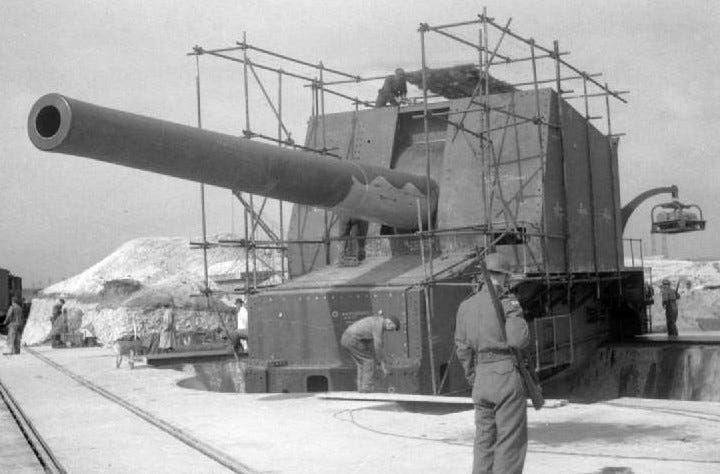
The invasion that came, however, bore little resemblance to the scenario that British planners had spent decades preparing for.
In December 1941, Japan’s General Tomoyuki Yamashita landed his forces in southern Thailand and northern Malay. Rather than attempt a direct naval assault against the island’s coastal defenses, Yamashita’s troops advanced south through the dense Malay jungle. To maintain their momentum without relying on heavy, slow-moving supply lines, the Japanese infantry used thousands of cheap, easily repaired bicycles.

As the rubber tires of the Japanese vanguard crunched through the mud, British forces retreated. The great coastal guns at Singapore were not entirely useless (they did rotate), but they were stocked almost exclusively with armor-piercing shells meant for ships, which buried themselves harmlessly in the dirt rather than exploding among the advancing infantry. By the time Yamashita reached the Johor Strait, he had severed Singapore’s fresh water supply.
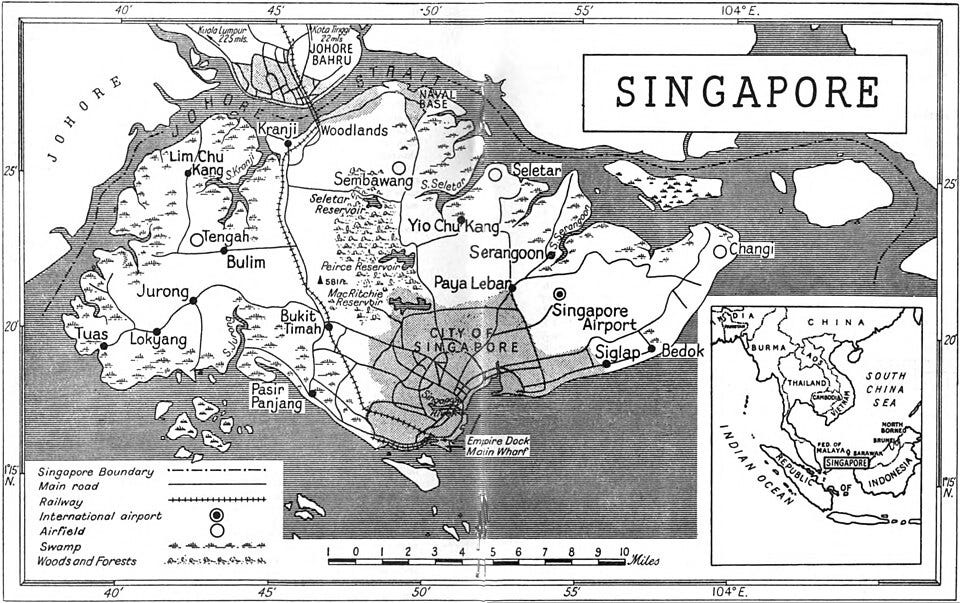
On February 15, 1942, General Arthur Percival surrendered over 80,000 British and Commonwealth troops to a Japanese force half that size. It was the largest British military surrender in history.
Now, 85 years later, in that same stretch of water, a different power is running a similar calculation. The Malacca Strait, the narrow 550-mile-long passage between Indonesia and Malaysia, is seen by the U.S.as the most significant geographic pressure point they have on China. In a conflict scenario, particularly a flashpoint over Taiwan, the U.S. relies on its dominance in these waters to act as an asymmetric chokehold, interdicting Beijing’s primary gateway to the world.
In 2003, China’s Hu Jintao stood up at a party conference and publicly named this vulnerability the “Malacca Dilemma”. This was an unusually candid confession of weakness for a CCP leader. While this admission did acknowledge a legitimate vulnerability for China, it may also have been strategically used to legitimize a naval expansion and Indian Ocean infrastructure build that Beijing wanted to pursue regardless.
In the twenty years since, China has built the world’s largest navy by hull count, developed missiles purpose-built to push American carriers out of effective range, established a naval foothold in Cambodia, laid pipelines through Myanmar, and begun reducing its oil dependency through the largest electric vehicle buildout in history.
China is still exceedingly vulnerable to the strait, of course. 80% of its oil passes through the two-mile-wide chokepoint. Nevertheless, the U.S. has not adequately adapted to what China has built in response to the Malacca Dilemma over the last 20 years, and has not constructed the shock absorbers in (1) munitions production, (2) allied energy security, (3) critical mineral supply chains, or (4) distributed naval architecture that would allow it to actually pull the Malacca lever without damaging itself in the process.
By treating the Malacca Strait as a permanent, static advantage, the U.S. risks repeating Britain’s mistake: staring out across the water, beautifully prepared for a threat that perhaps has already evolved to go around them.
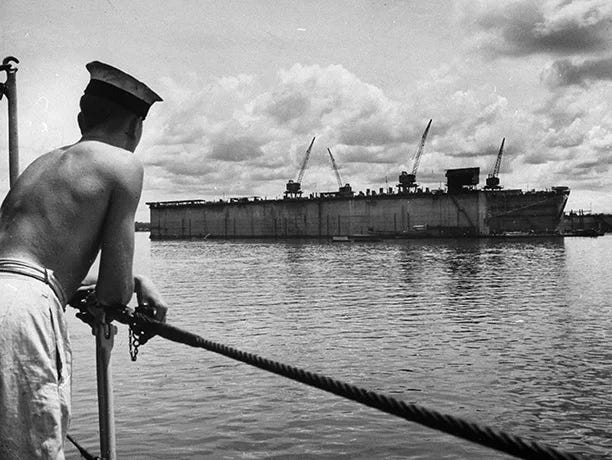
The Gate to China
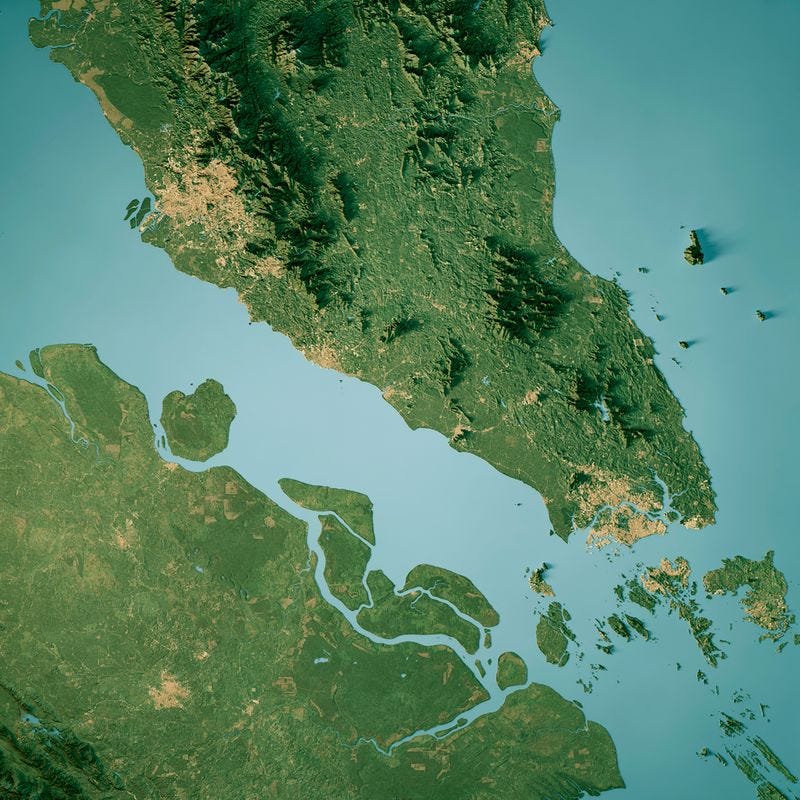
The Strait of Malacca runs between the Malay Peninsula and the Indonesian island of Sumatra, narrowing at its tightest point to just 2 miles wide and 23 meters deep.
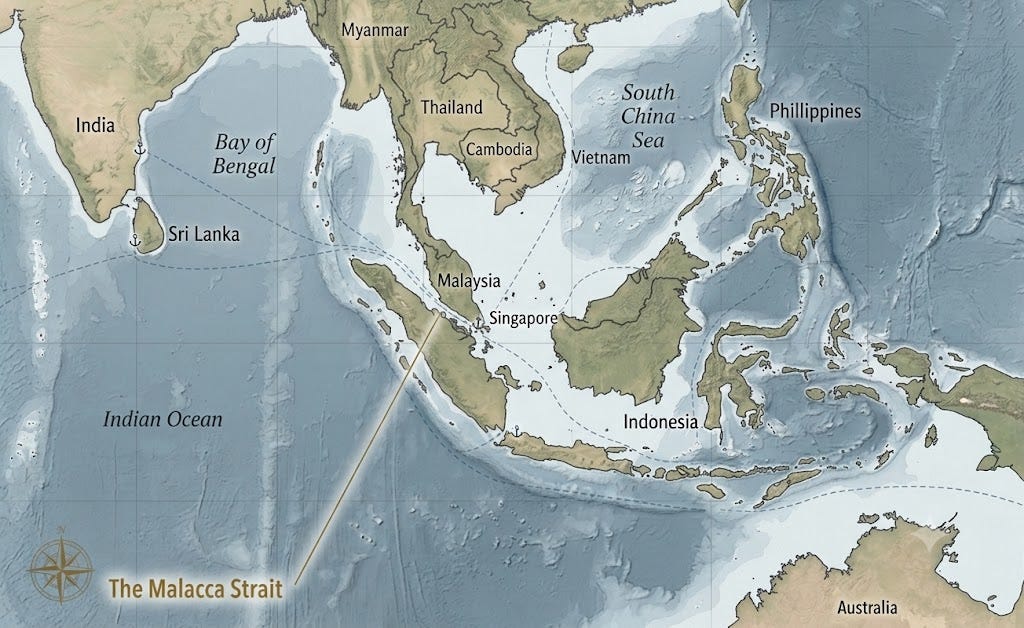
A ship threads through this gap every 5 minutes. Tankers carrying Middle Eastern crude push east towards China, Japan, Taiwan, and South Korea; container ships loaded with Asian manufactured goods head west toward the Suez Canal and Europe. Roughly 25% of all global seaborne trade passes through the strait, along with 45% of the world’s seaborne oil and 25% of all internationally traded cars.
The total cargo moving through the strait is worth an estimated $3.5 trillion annually, roughly equivalent to the entire GDP of the United Kingdom, the 5th largest economy in the world. Importantly, there is no real alternative; rerouting that volume of traffic around the strait, through the Sunda or Lombok passages further south, would add thousands of miles to each voyage and cost the global shipping industry an estimated $33.84 billion annually.
Chinese Imports
The Strait of Malacca is the gate that China must pass through to feed its factories, fuel its cities, and ship the products that keep its economy running.
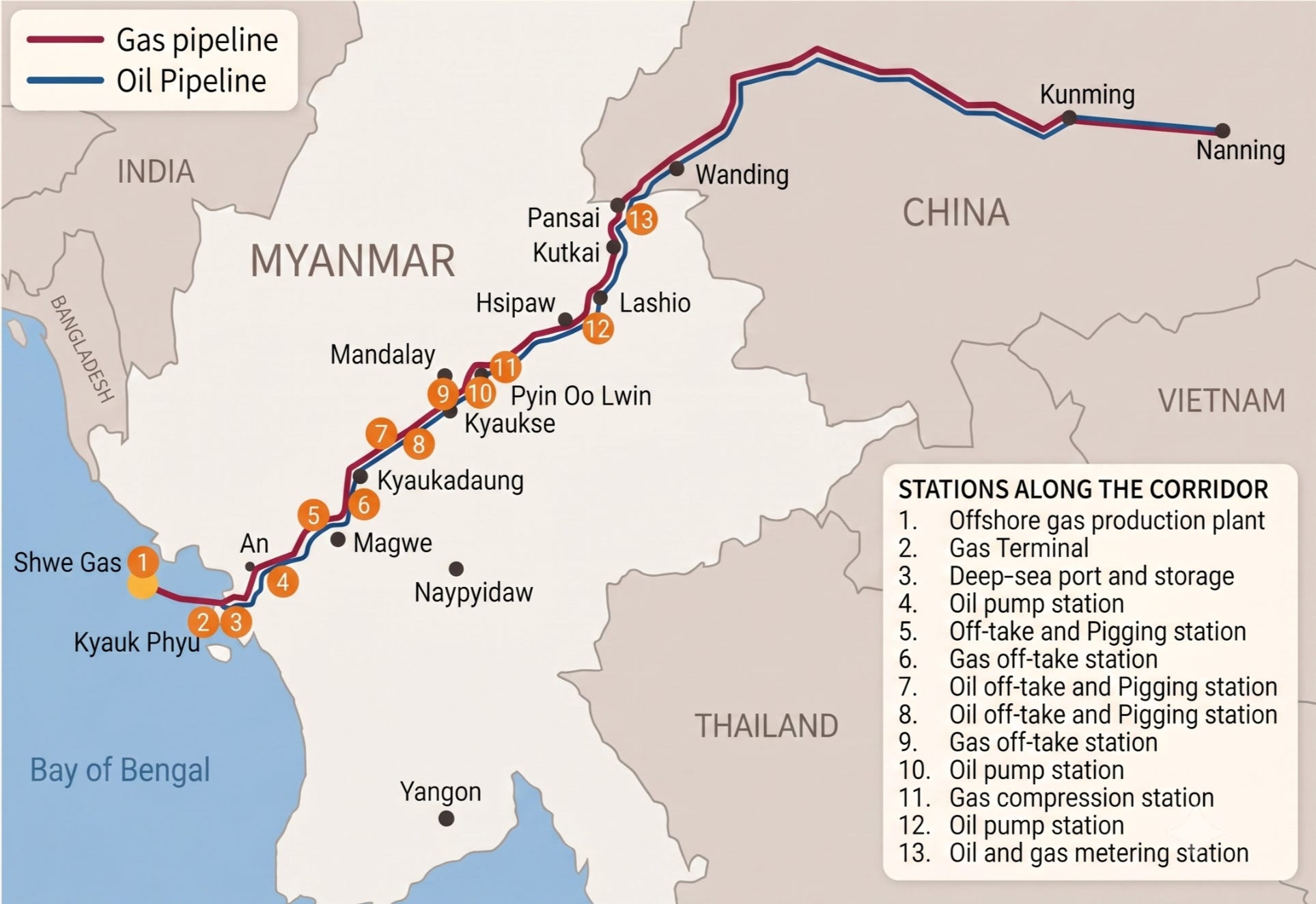
By the first half of 2025, more oil was moving through Malacca each day than through the Strait of Hormuz. China absorbs 48% of all crude oil transiting the strait (roughly 7.9 million barrels a day, out of the roughly 11 million barrels it imports daily) and, despite a decade of diversification toward Russian and Central Asian pipelines, 80% of its total energy supply still originates in the Middle East and has to pass through Malacca to get there. The one major bypass China has built, the pipeline running from Kyaukpyu on Myanmar’s coast to Yunnan province, can carry only about 440,000 barrels a day (roughly 4% of what the country actually needs).
Additionally, the majority of China’s grain imports, along with an estimated one-fifth of all the rice traded globally, pass through Malacca, and as of 2020, 65% of China’s soybean imports did as well. Soybeans are the backbone of China’s livestock industry, with nearly all of the country’s chicken, pork, and aquaculture feed dependent on soybean meal.
Chinese Export-Oriented Economy’s Weakest Point
The flow through Malacca runs just as heavily in the other direction. China is the world’s largest exporter, having shipped $3.58 trillion in goods in 2024 (nearly 70% more than the United States) and more than 60% of that trade by value travels by sea, with the bulk of its routes to Europe, the Middle East, and Africa funneling through Malacca. US-bound exports cross the Pacific instead, but Europe (China’s second-largest market), Africa, and the Middle East are reached almost entirely through this strait.
Industrial output makes up nearly 37% of China’s GDP, and roughly 32% of the country’s labor force works in the industrial sector. A disruption at Malacca stalls the strait, which stalls the factories, and stalls the workers; China has little cushion built in for that scenario. Public social spending sits at only 10% of GDP (compared to 22-25% across the OECD and roughly 25% in Japan), and hukou residency restrictions mean migrant workers, the population most exposed to a manufacturing slowdown, largely can’t access urban social services when the work dries up.
China’s economy is built in a way such that a shipping disruption translates almost directly into instability. In one recent forecast, 63% of China analysts identified economic stress and unemployment as the most likely drivers of public unrest, an outcome the CCP hopes to avoid above all else.
The Chess Match in the Strait
The Rook: The U.S.
The U.S. 7th Fleet keeps watch over the western lane through Malacca, and carrier strike groups pass through routinely. In April 2025, the USS Carl Vinson passed through en route to CENTCOM while China’s Shandong carrier was conducting large-scale exercises near Taiwan. In April 2026, Washington signed a Major Defense Cooperation Partnership with Indonesia covering subsurface capabilities, autonomous platforms, anti-submarine warfare, and expanded U.S. overflight access in Indonesian airspace. Indonesia’s archipelago straddles the Lombok and Sunda Straits, the only meaningful alternatives to Malacca itself.
The Knight: China
China’s People’s Liberation Army Navy (PLAN) has grown into the largest navy in the world by hull count (over 370 battle-force platforms, projected to reach 435 by 2030) and now fields five types of anti-ship ballistic missiles. An estimated 250 to 400 DF-26 launchers are operational across at least seven brigades.
For all its ships, China is still on the outside looking in. Its only forward base is in Cambodia, which it cannot even officially acknowledge because Cambodia’s constitution prohibits permanent foreign military bases (Beijing calls it a “joint training center” while keeping ships there year-round). Aside from that, their access relies on a contested listening outpost on Myanmar’s Coco Islands and a handful of port access agreements with fragile states.
The Pawns: Bordering States
The three states that actually border the strait (Singapore, Malaysia, and Indonesia) have remained neutral, and are attempting to leverage value from both the U.S. and China.
Singapore has been explicit that it does not want to be party to any coalition that confronts China. What it has done instead is carefully constructed a set of access agreements, renewed through 2035, that give the U.S. Navy rotational use of Changi Naval Base on a “places not bases” model: American carriers can berth, resupply, and depart without Singapore being classified as a U.S. military base in any formal sense. Singapore built Changi with its own money, to U.S. carrier specifications. When Washington lost access to Subic Bay in the Philippines in 1992, Singapore proactively stepped in to host the logistics command (the rationale being that it would prevent China from becoming the single regional power dominating Southeast Asia). However, China is simultaneously Singapore’s largest trading partner, and 67% of Singaporeans view China favorably. Singapore functions as one of the primary conduits for Chinese capital flowing into Southeast Asia.
Indonesia is effectively doing the same thing. It hosts the sprawling Super Garuda Shield exercises with American forces while simultaneously courting billions in Chinese infrastructure investment, adhering to its traditional bebas-aktif ( “independent and active”) foreign policy doctrine as justification for doing both.
Malaysia defends its South China Sea energy assets against Chinese maritime incursions, but it also keeps China as its largest trading partner and ensures that no Western defense partnership is allowed to compromise that relationship.
A U.S. blockade of Malacca would require either forcing these states’ hands or overriding their sovereignty, both of which carry enormous political costs. Additionally, if the U.S. blockaded Malacca, China could reciprocate by blockading U.S. allies (Japan, South Korea, Taiwan) through the East and South China Seas.
China’s Responses
The Thousand-Mile Wall
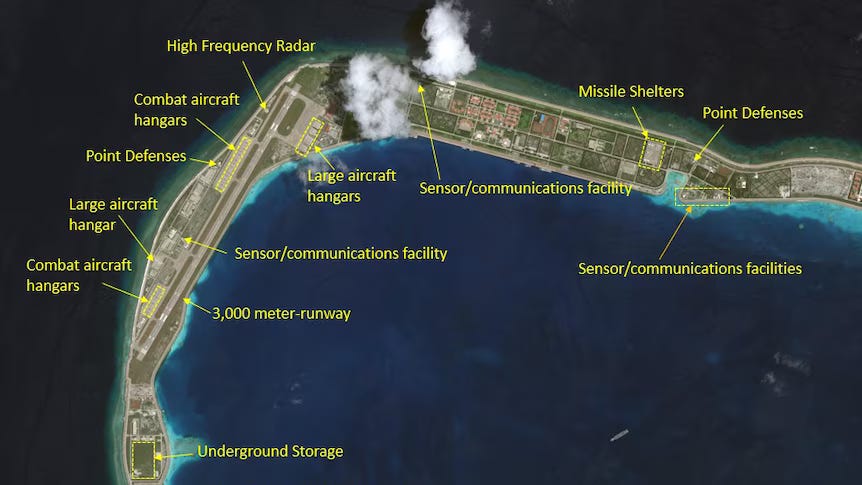
China’s most direct response to the Malacca vulnerability has been to make the strait prohibitively dangerous for anyone to use as leverage against it. Beijing began converting submerged reefs and shoals in the South China Sea into fortified military outposts in 2013. They have invested in long-range missile forces, integrated air defenses, electronic warfare systems, and anti-access/area-denial (A2/AD) capabilities intended to keep U.S. forces at a distance.
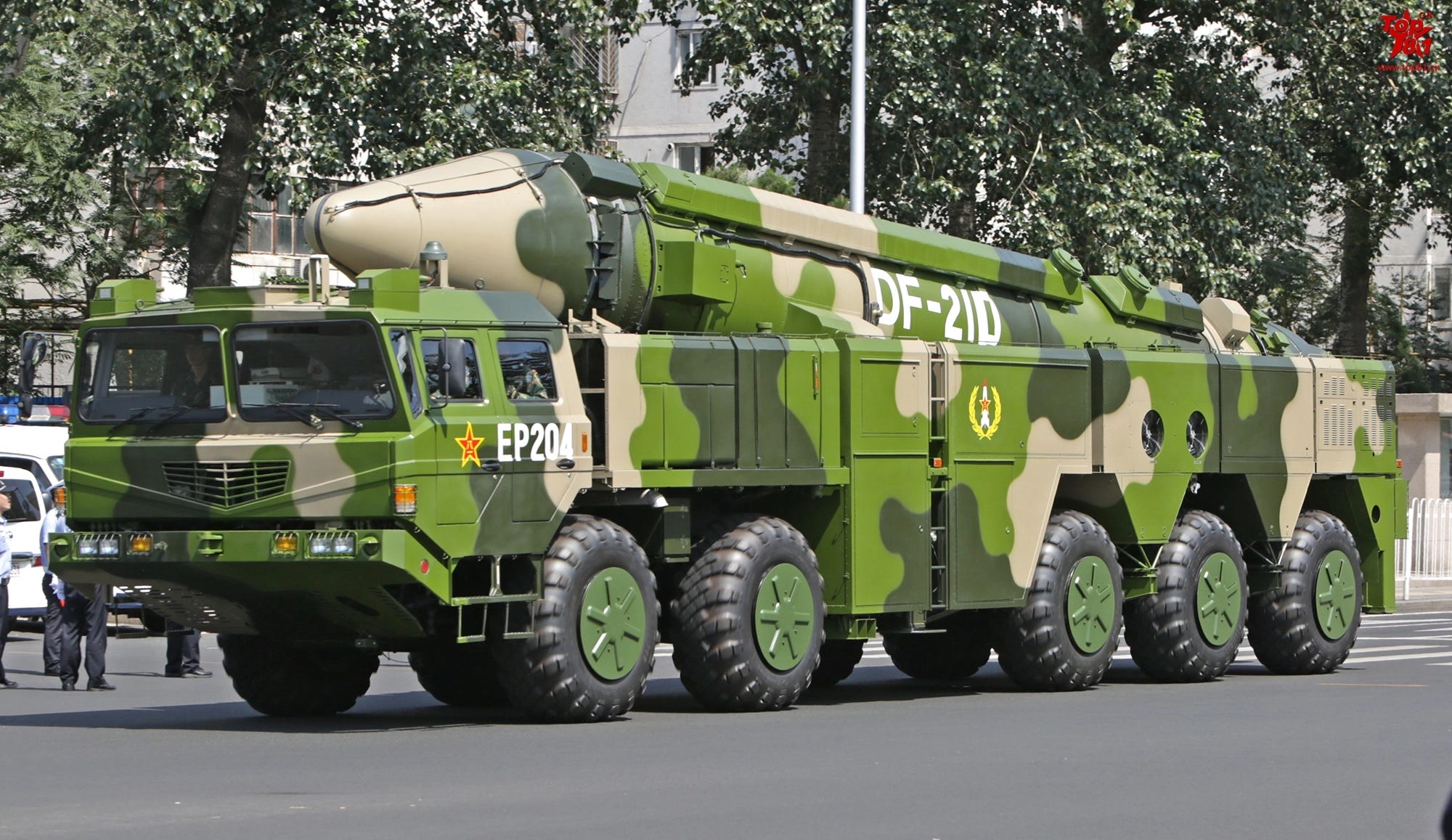
The centerpiece of this architecture is the DF-21D ‘Carrier Killer’ (2,150 km range) and DF-26 (3,000-4,000 km range) anti-ship missile families; they are road-mobile, difficult to locate, and designed specifically to hold U.S. carrier strike groups at risk from the Chinese mainland. An American carrier that once could operate with relative freedom 200 miles off the Chinese coast now faces credible missile threats at 1,500 kilometers.
China has also used the Malacca Dilemma to justify a blue-water naval expansion that serves strategic ambitions beyond the narrow question of keeping tankers moving through the strait. There has been a shift, for instance, in China’s defense white papers from 1998 to 2008, from explicit statements that China does not station troops abroad to language about “distant force projection” and “seizing the strategic initiative in military competition”. Manifestations of this include a naval base in Djibouti, port access agreements in Bangladesh, Myanmar, Pakistan, and Sri Lanka, the deployment of nuclear submarines to the Indian Ocean for the first time in 2013, and the broader String of Pearls military infrastructure network.
Because of this, the U.S. can no longer rely on traditional, localized naval dominance to counter China. Maritime conflict has turned into a long-range contest of missiles, sensors, logistics, and industrial production capacity. The Strait of Hormuz is a working example of this. Houthi anti-ship missiles have shown that relatively cheap weapons can disrupt some of the busiest shipping lanes in the world without any navy needing to physically occupy the water.
A narrow-channel blockade of Malacca would be a suicide mission for whichever side attempted it first. The more realistic conflict scenario is a distant blockade initiated from the Indian Ocean and South China Sea approaches, where both sides use anti-ship missiles, submarines, and long-range strike systems to make the strait’s approaches too dangerous to transit. What will determine the outcome, in the end, is magazine/munitions depth, industrial manufacturing capacity, and sensor capabilities.
This is where Washington’s procurement pipeline becomes a central problem, relying too heavily on expensive, low-volume platforms. U.S. destroyers and cruisers carry between 90 and 96 vertical launch system (VLS) cells. To reliably intercept a single incoming advanced anti-ship missile, a ship typically fires two interceptors. A saturating salvo of 20 incoming missiles could exhaust nearly half a destroyer’s entire magazine in a single engagement. These VLS cells cannot be reloaded at sea; the ship has to return to a friendly port to do so. Meanwhile, by mid-2025, U.S. Patriot interceptor stocks had fallen to 25% of the Pentagon’s minimum requirements, with Lockheed delivering just 620 interceptors across the entire year, roughly 1.7 missiles per day for a global network of allies. Based on current stockpiles, key munitions would run out in approximately one week in a Taiwan Strait scenario.
US defense procurement needs to move toward long-range, distributed, attritable systems that can operate from outside the reach of Chinese missiles without requiring a carrier in the kill zone. Castelion, for instance, builds low-cost hypersonic missiles that can avoid the unit-cost problem that makes current munitions stocks brittle. Saronic is working on autonomous surface vessels that can sustain persistent presence without putting sailors at risk. And Vatn is developing autonomous underwater vehicles which can operate undetected in contested waters.
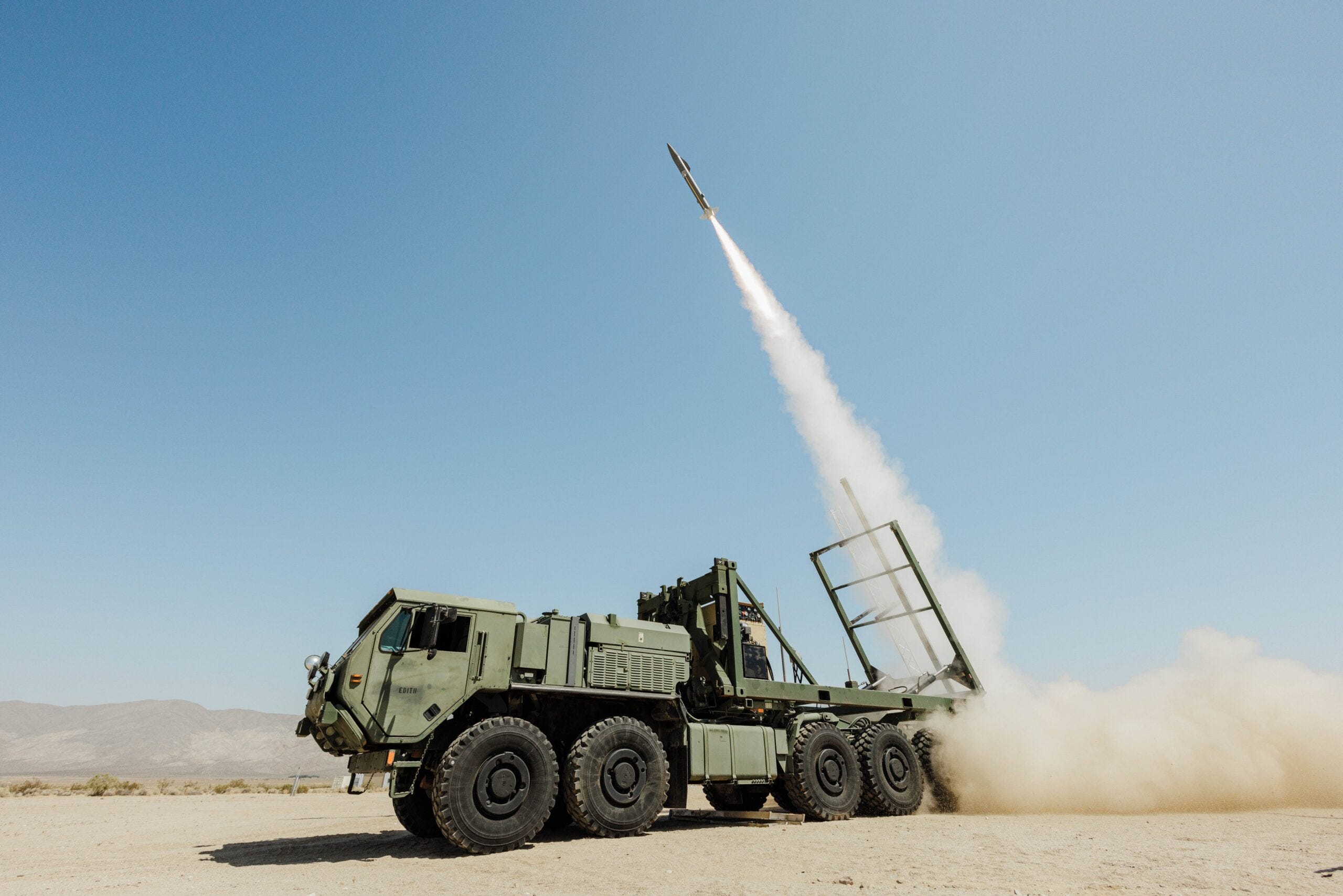
Equally important, or perhaps more so, is the ability to blind the strike chain. A DF-26 launch requires a satellite to spot the target, a data link to pass coordinates, a radar to lock on, and a terminal seeker to guide the warhead home. Electronic warfare (e.g., satellite jamming or GPS spoofing) may do way more to degrade China’s coastal defenses than burning through a finite stack of multi-million-dollar interceptors.
EV Build-Out, Battery Dominance, and Energy Security
Beijing’s response beyond defensive maritime projection has been to shift the burden of oil dependency through the Strait into a broader energy mix. In many ways, Beijing’s electric vehicle (EV) buildout is an energy security project. In 2026, EVs accounted for 57% of new passenger car sales in China, and Chinese transport oil demand recorded its first annual decline in 2024. EV fleets displaced roughly one million barrels per day of oil demand in 202. This is projected to reach 2.7 million barrels per day by 2030, which would be worth approximately $80 billion per year in avoided import expenditure at current prices.
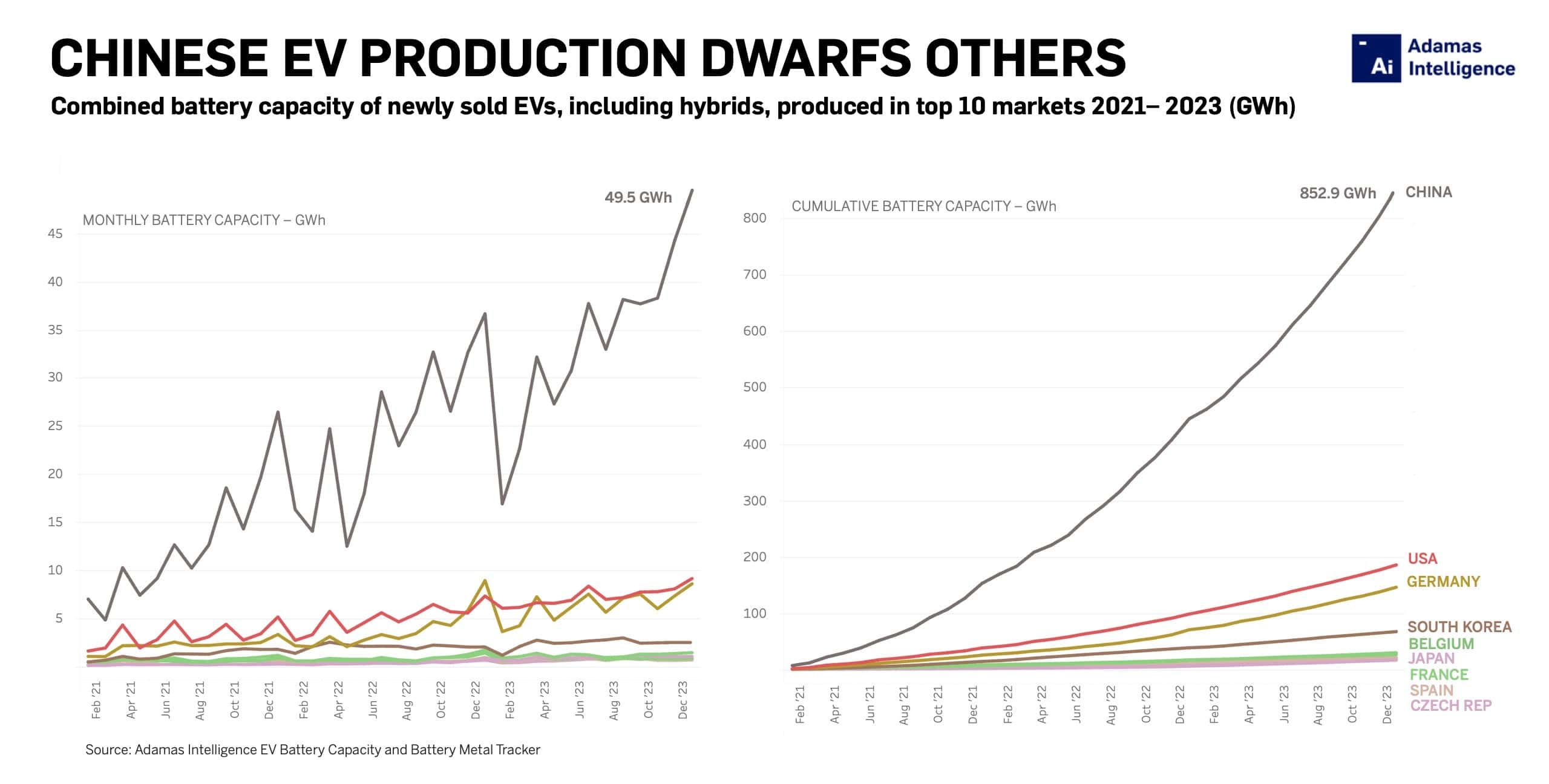
Alongside the demand reduction, China spent those same two decades locking down the supply chains the rest of the world would need to replicate its EV build-out. China controls roughly 75% of global battery manufacturing capacity, processes approximately 60% of the world's lithium, 70% of its cobalt, and over 90% of its rare earth elements.
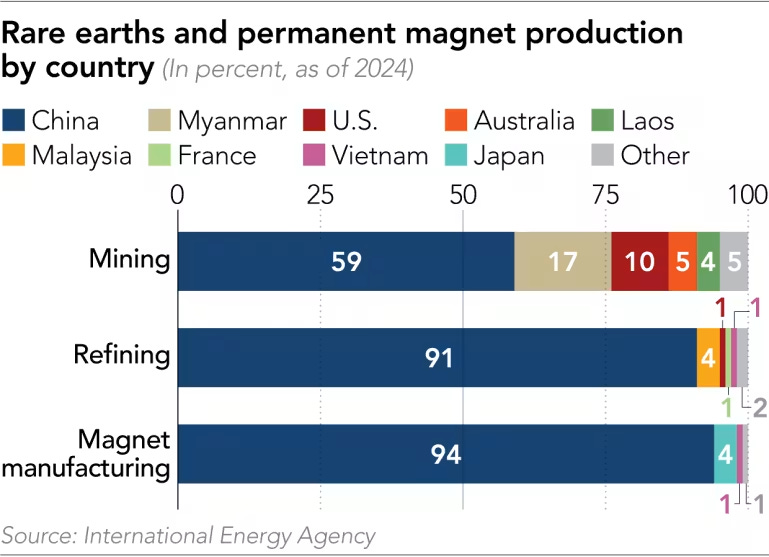
In 2023, China restricted exports of gallium and germanium (both essential to semiconductor and defense manufacturing) and followed in 2024 with graphite restrictions, targeting the material in lithium-ion battery anodes.
If the U.S. moves to choke China’s oil supply at Malacca, Beijing can counter by restricting the flow of battery materials, rare earth magnets, and processed minerals that prop up Western automotive, defense, and electronics manufacturing (mutually assured energy destruction).
China’s military, however, runs on oil. That still has not changed. A prolonged Malacca blockade would weaken Chinese military capacity in ways that rare earth export restrictions cannot reciprocate symmetrically. The more accurate argument here then is that China has built enough economic interdependence through supply chains and manufacturing relationships that the cost of pulling the Malacca lever has risen significantly.
The correct U.S. response is to reduce China’s counter-leverage. We must build up domestic rare earth processing capacity; lock in processing investments with Australia, Canada, Indonesia, and resource-rich African partners before China does; and expand strategic rare earth stockpiles with the same institutional seriousness as the Strategic Petroleum Reserve.
The Belt and Road Initiative
Launched formally in 2013 but rooted in infrastructure diplomacy that began a decade earlier, the Belt and Road Initiative (BRI) is the largest infrastructure program in human history; it spans 140 countries and represents over $1 trillion in committed investment from China.
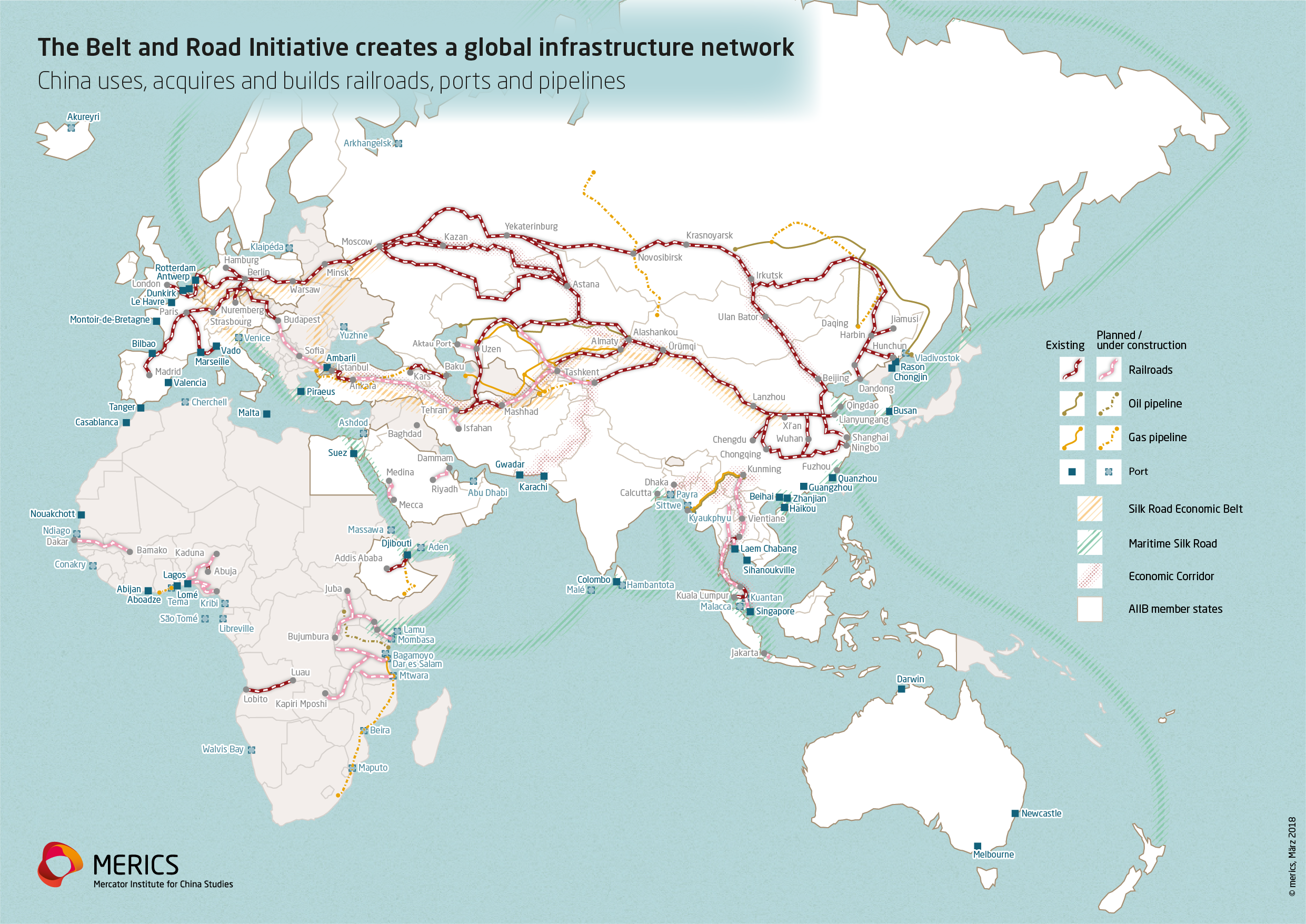
BRI’s overland corridors (CPEC through Pakistan, CMEC through Myanmar, the Central Asian pipeline network through Kazakhstan and Turkmenistan) are attempts to create land-based supply routes that connect China to oil-producing regions. If you can pipe oil from the Gulf of Oman through Pakistan to Xinjiang, or from the Bay of Bengal through Myanmar to Yunnan, you have effectively removed that volume from Malacca’s waters.
China’s BRI investments in ports along the Indian Ocean (Gwadar, Hambantota, Djibouti, and others) are attempts to create alternative maritime staging points that give the PLAN the ability to protect Chinese shipping further from the strait, and to give Chinese commercial vessels waypoints that don’t depend on Singapore. The idea being that even if you can’t avoid the strait entirely, you can reduce your vulnerability to disruption of it by having more options for where ships are serviced/resupplied and protected along the route.
The third mechanism, which is less discussed, is relationship-building with oil-producing states. By embedding itself economically into Saudi Arabia, Iran, Iraq, and African producers through BRI investment, China is trying to reduce the risk that U.S. pressure on those countries could cut off Chinese oil supply before it reaches Malacca. If the producing country is economically dependent on Chinese investment, it is less likely to cooperate with a US-led energy embargo against China.
None of this, though, has really worked to bypass Malacca. The China-Pakistan Economic Corridor carries nowhere near the oil volumes that would matter during a maritime crisis, the Myanmar corridor runs through a country fractured by ongoing civil war, and Hambantota (a debt-leased commercial port in Sri Lanka) has not yet transitioned into an operational naval facility. Thus, twenty years of infrastructure investment later, China is no less dependent on Malacca than it was when Hu Jintao named the dilemma in 2003.
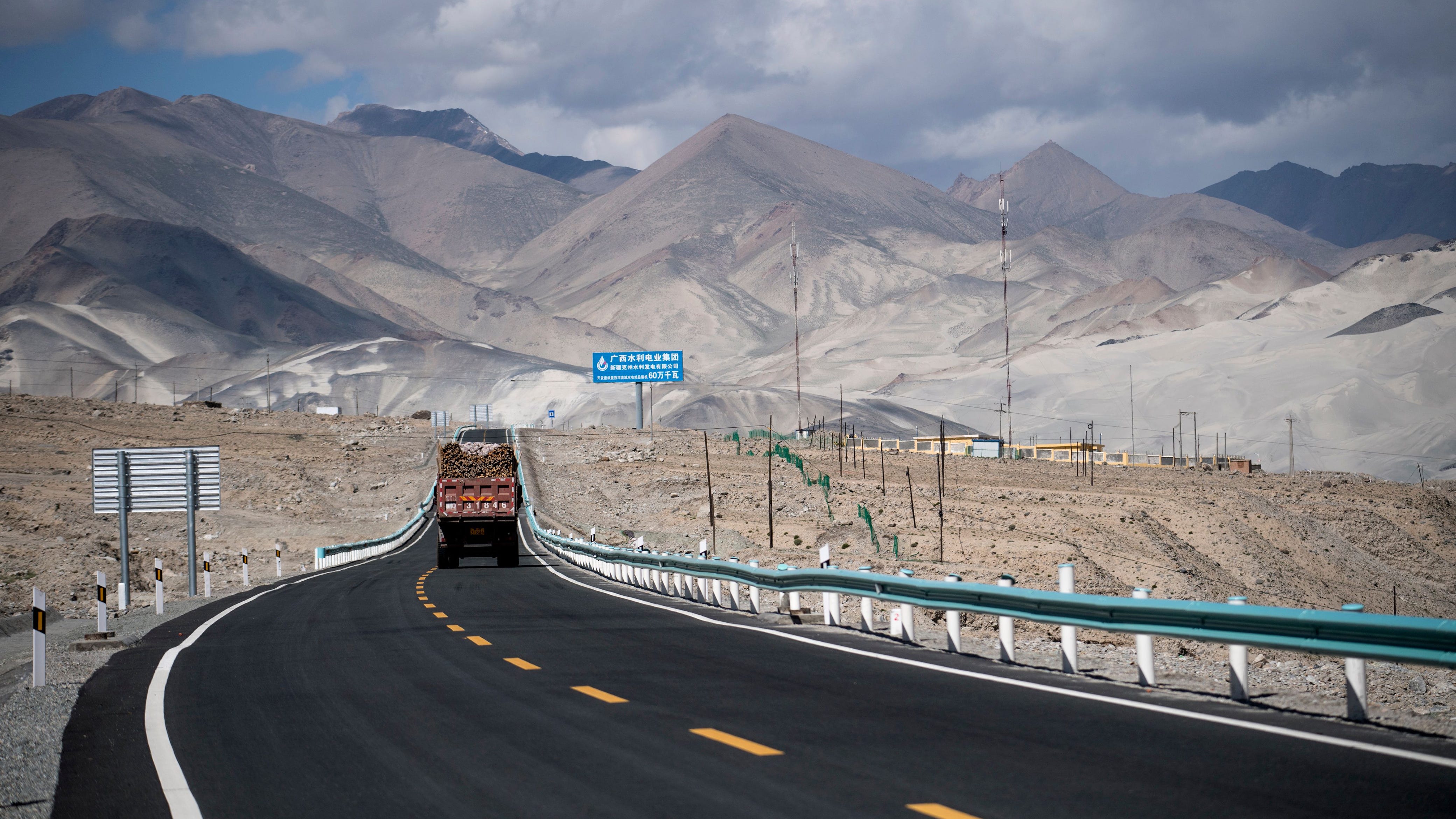
But measuring BRI against the bypass objective may be the wrong test, and one the U.S. relies on too heavily when assessing the leverage it retains. China doesn’t necessarily need CPEC to work at scale to benefit (at least a little bit) from having built it. It needs Pakistan to be economically entangled enough that Islamabad won’t cooperate with a US-led containment effort. The port investments created relationship infrastructure with littoral states across the Indian Ocean that the U.S. has to account for in any disruption scenario. By sinking capital directly into major oil-producing hubs (from Saudi Aramco and Iraqi oil fields to Iranian infrastructure and African upstream assets), China has made it such that a US-led energy embargo or strait disruption against China is substantially harder to execute than it would have been twenty years ago.
A New American Playbook
Conflict is a problem of asymmetric edges. Every meaningful strategic advantage- from a nuclear arsenal to sanctions- represents one side’s ability to impose costs the other cannot absorb symmetrically. The Malacca Strait has long been one of the United States’ most structural asymmetric edges over China, and no amount of Chinese naval spending will ever change this.
Paradoxically, this vulnerability functioned as an evolutionary anti-fragility stressor for China. The threat of a blockade incentivized Beijing to build a blue-water navy, an anti-area architecture, a battery monopoly, and a hardened industrial base.
The U.S. must do the work to make the Malacca advantage usable and decrease the cost of its deployment. Munitions production needs to scale up to sustain a prolonged blockade. Procurement must pivot toward distributed, long-range, attritable systems and counter-targeting capabilities that can operate outside of Chinese missile range. The U.S. must also secure domestic rare-earth processing and mineral stockpiles to neutralize China’s counter-leverage. Furthermore, underwriting the energy security of allies like Japan, South Korea, and Taiwan is important to eliminate the mutual hostage dynamic that currently makes the lever very costly to pull.
The Malacca Strait remains the central geographic reality of the U.S.-China rivalry; the pressing question remains whether Washington can adapt to retain an asymmetric edge, or it if merely assumes it still can.