
The Race for the Warm Shell
In the summer of 2024, xAI set out to build Colossus, then the world’s largest AI supercomputer. Instead of joining a utility queue, the company leased a vacant Electrolux factory in Memphis, trucked in 35 mobile gas turbines for power, and had 100,000 GPUs running in just 122 days (a process that would have typically taken about four years). It took just 19 days from the time the first rack rolled onto the floor until training began.
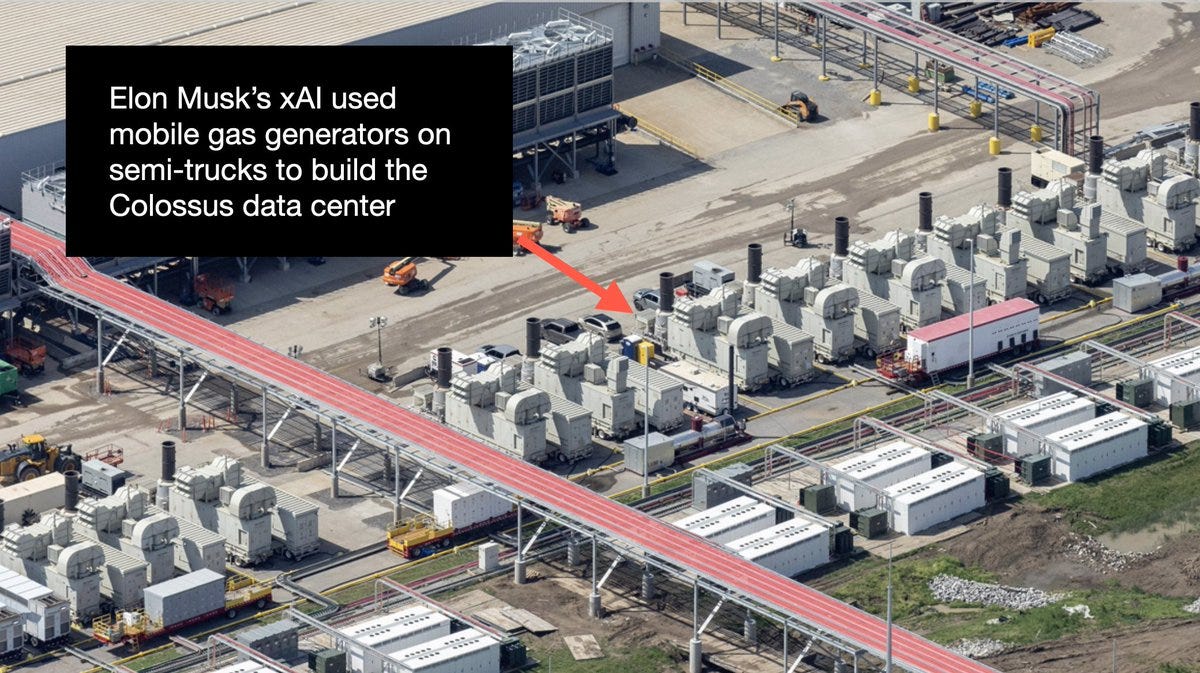
For the Colossus 2 expansion, xAI deployed 27 turbines in Southaven, Mississippi. The company intentionally kept the units mounted on trailers and transported them across the Mississippi-Tennessee border to classify them as temporary mobile equipment and thereby avoid stationary-source permitting requirements.
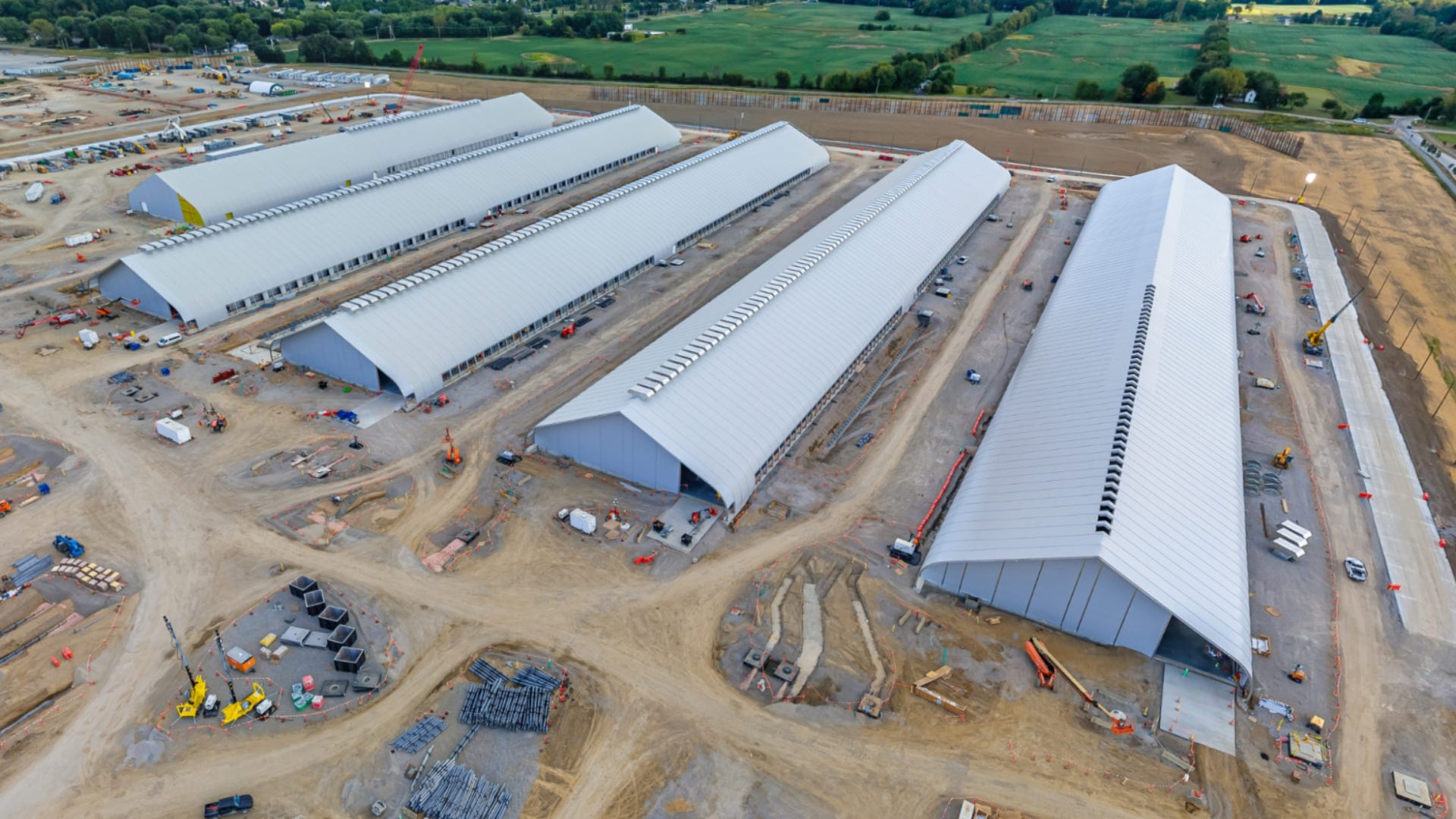
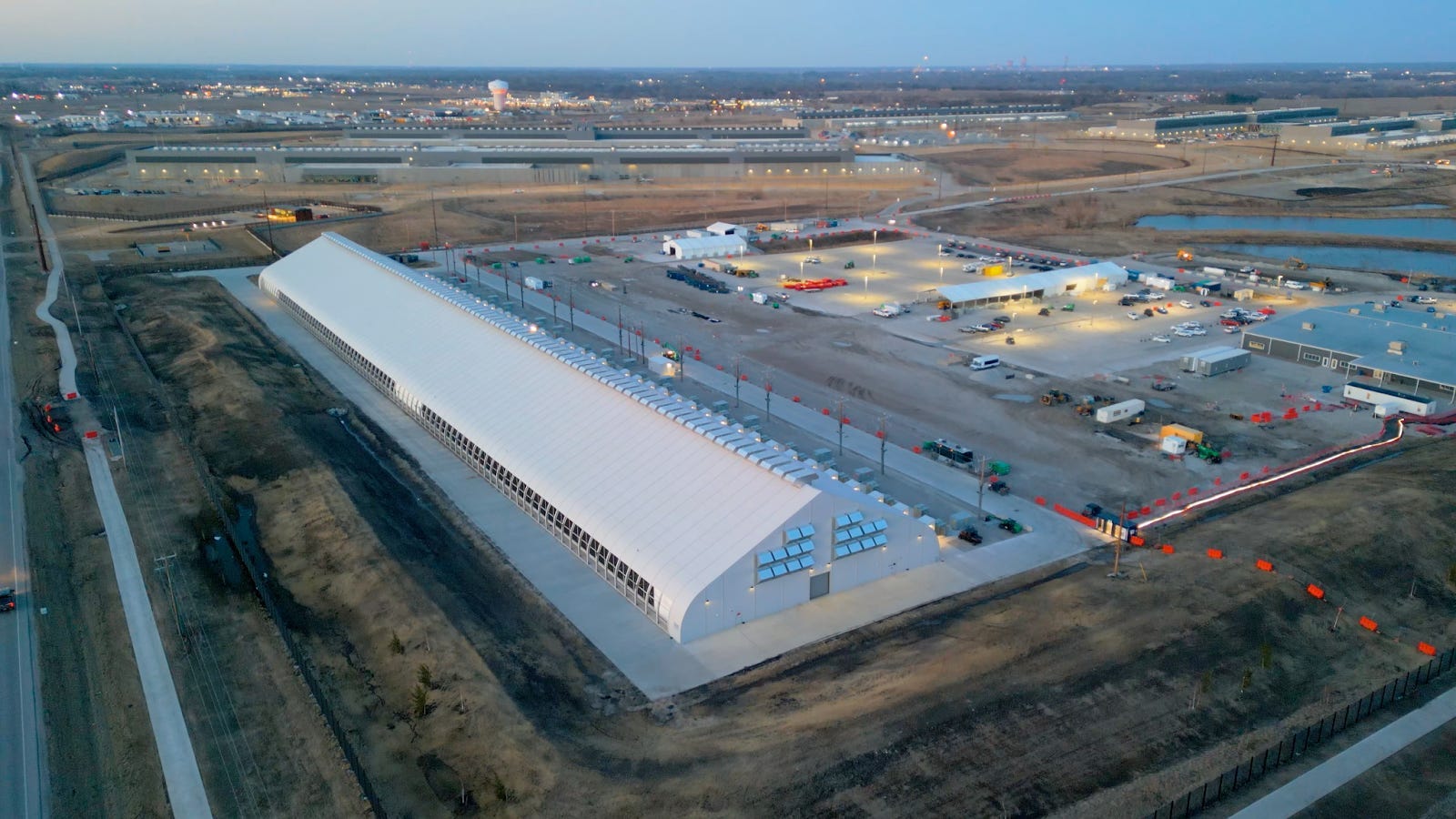
xAI is far from the only company employing unconventional strategies to secure capacity as quickly as possible. Meta recently circumvented the typical 18-to-36-month concrete build cycle by constructing five 125,000-square-foot, weatherproof, fabric-skinned tents at its Prometheus campus in approximately three months. In addition, energy infrastructure firms such as ProEnergy are retrofitting Boeing 747 engine cores into stationary power generation units to bypass the multi-year commercial turbine backlog.
It is becoming clear that the modern AI race is not only being won in Silicon Valley codebases or Taiwanese foundries. Instead, it is playing out on Texan construction sites and in the meeting rooms of regional utility boards. Large tech companies are now focused on building infrastructure as quickly as possible, moving away from traditional data center strategies to prioritize speed.
As Microsoft CEO Satya Nadella noted:
“The biggest issue we are now having is not a compute glut, but it’s power – it’s sort of the ability to get the builds done fast enough close to power. So, if you can’t do that, you may actually have a bunch of chips sitting in inventory that I can’t plug in. In fact, that is my problem today. It’s not a supply issue of chips; it’s actually the fact that I don’t have warm shells to plug into.”
Jensen Huang has echoed similar sentiments:
“If you want to build a data center here in the United States, from breaking ground to standing up a AI supercomputer is probably about three years. [China] can build a hospital in a weekend. That's a real challenge. And so at the infrastructure layer, their velocity of building things [is] because they are builders. Their velocity of building things is extraordinarily high.”
In a world where speed-to-power has become the binding constraint, physical infrastructure velocity is the only moat that matters. The AI race will be won by whoever can secure and energize gigawatts faster than everyone else.
The Cost of Delay
In 2024, developers could often secure energized capacity within roughly two to three years. By 2026, obtaining grid power in many core AI markets requires four to seven years. Lead times for critical power equipment have also been increasing.
In one Federal Energy Regulatory Commission (FERC) filing, data developer QTS paid $55.1M to accelerate a project by four months (an implied $13.75M per month, or roughly $458K per day).
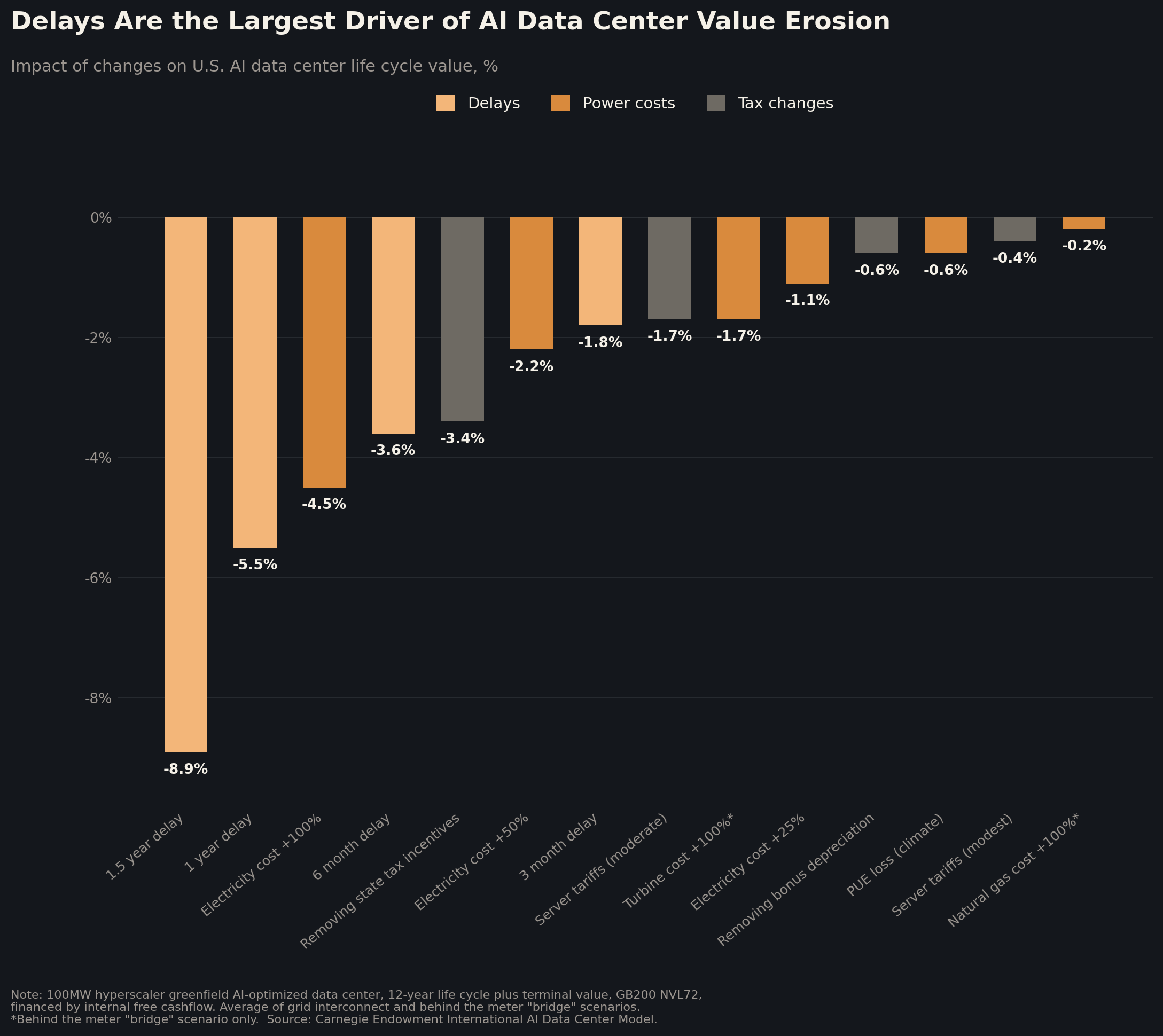
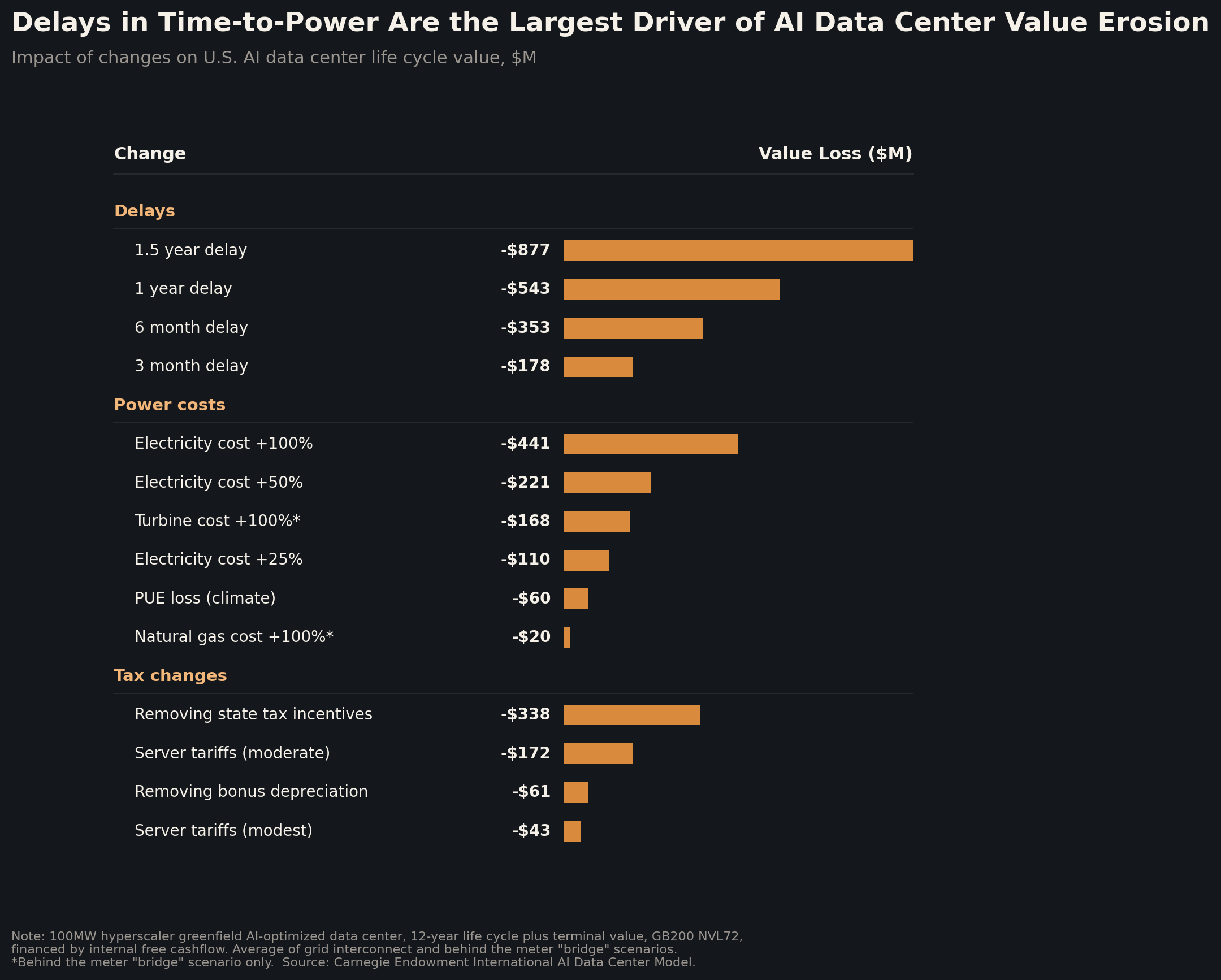
For a standard 100MW greenfield facility, a 1-year delay reduces the entire life-cycle asset value by $550 million (5.5% of the data center’s roughly $10 billion life cycle value), making delays the largest driver of AI data center value erosion.
Three primary economic pressures accelerate the erosion of data center value during deployment delays. First, delayed revenue accumulates with capital costs. For example, a 100 MW Blackwell facility can generate nearly $200 million per month at full capacity. Each month offline causes significant lost revenue, while interest accrues on debt-financed construction, increasing the risk of punitive loan renegotiations or project failure. Second, delays permanently reduce the duration of peak yield windows. Nvidia allocates advanced silicon, such as GB200s, to customers who commit 12 to 18 months in advance. However, unpredictable time-to-power timelines can leave these chips idle in warehouses. Nearly 100 MW of fully built capacity in Santa Clara remains unpowered while awaiting grid upgrades. Since AI chip rental margins decline rapidly, with peak yields occurring mainly within the first 12 to 24 months after release, a six-month power delay irreversibly eliminates the asset's most profitable operational period. Finally, the speed premium is critical for model training. Bringing capacity online more quickly enables model developers to immediately use compute resources for training, providing a significant advantage in the AI race.
Towards the One-Day Limit
xAI currently sets the standard for absolute deployment speed, leading the hyperscalers in this regard.
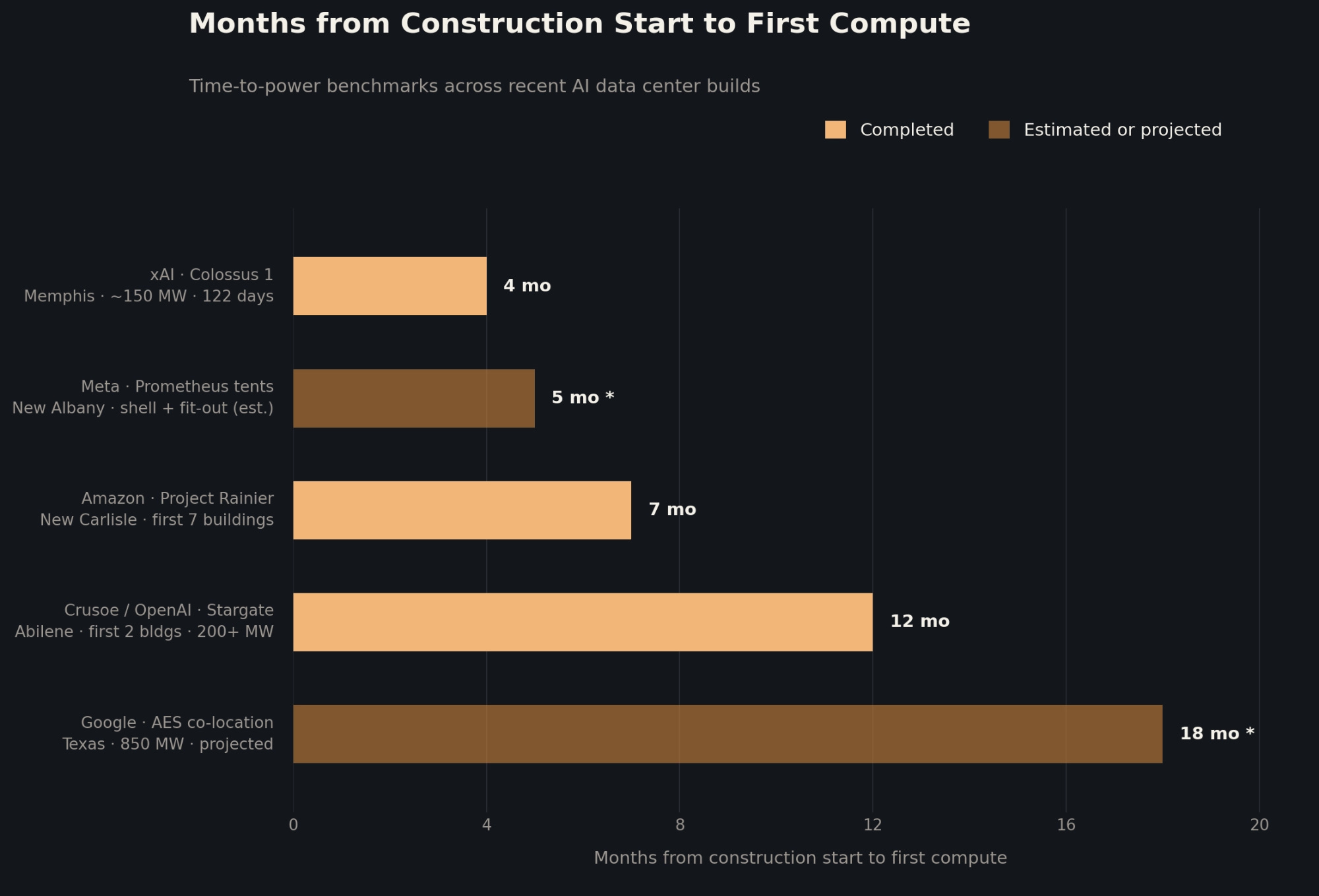
xAI’s 122-day build and 19-day rack-to-training window mark the start of an engineering learning curve. And with each new project, more complexity moves from the site to the factory, which shortens the time needed on-site. This learning curve has a theoretical endpoint, what we call the One-Day Limit: the point at which on-site construction is eliminated almost entirely. To get there, the deployment unit must change from a server rack added to an existing building to a fully integrated 10-megawatt ISO container module. Each module would come with computing hardware, liquid-cooling systems, optical networking, and power conditioning already installed and tested at the factory.
The industry is already moving in this direction. Vertiv’s MegaMod HDX and Schneider Electric’s EcoStruxure PODs are now built in factories with liquid cooling and power distribution included. HPE’s containerized PODs arrive with racks and cabling already set up. Crusoe has taken this the furthest so far. Its 352,000-square-foot facility in Brighton, Colorado produces ‘Spark’ modules, each about a megawatt and the size of a shipping container, with power, cooling, and GPU racks already installed. These modules can be deployed in as little as three months.
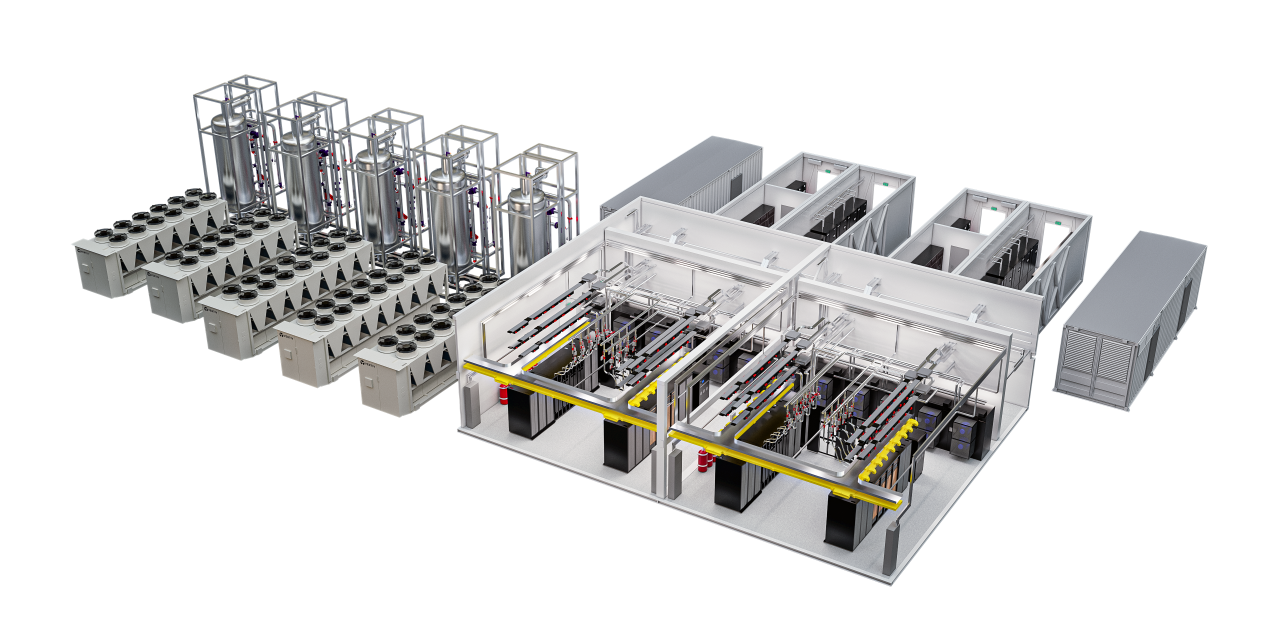
To find out how close the industry can get to true one-day deployment, we break down the data center deployment playbook into six clear stages, identify the physical limits of each, and compress them even further.
Velocity Lever 1: Buy a Building, Not Dirt
While whole-facility drop-in modular data centers represent an optimal end-point, at gigawatt scale for GPUs, a robust physical structure will always remain necessary to ensure security and weatherproofing for hundreds of thousands of liquid-cooled chips.
In a typical greenfield project, most of the first year is spent on grading, laying foundations, putting up structural steel, and building the envelope. xAI avoided all of this. The 785,000-square-foot Electrolux plant already had a slab designed for manufacturing, loading bays built for freight, and the right industrial zoning. It then scaled to a 2 GW footprint across Whitehaven and Southaven, Mississippi, by acquiring roughly another million square feet of existing industrial space (packing ultra-dense compute inside pre-built facilities while placing heavy power and cooling equipment outdoors). CoreWeave did something similar on the East Coast, buying the former Merck campus in Kenilworth, New Jersey, for $322 million and spending around $1.2 billion to convert it.
When looking for a good brownfield site, the main concern is electrical capacity, not necessarily structure. Old automotive plants, aluminum smelters, and other heavy industrial sites usually work because they offer three key things: floors that can handle much more weight than server racks need, existing medium-voltage power (often with a substation on site), and zoning that avoids the long rezoning process new sites face. For example, Merck’s Kenilworth site had dual medium-voltage feeds, a substation for about 50 MW, and cogeneration.
If there isn’t an existing building to use, the next best option is to put up a shell in weeks instead of years. Choice of materials matters quite a bit here. Concrete and precast are common for permanent buildings because they are strong and fire-resistant, but they are about three times heavier per square foot than steel. Lighter steel and aluminum frames are preferable when shipping or fast assembly is more important than structural cost. Meta’s Prometheus campus in New Albany is an example of this approach; they used aluminum frames and fabric skins to create weather-tight structures in about three months, compared to months or years for a permanent building nearby.
Velocity Lever 2: Co-Location & BTM Power
The quickest way to reach gigawatt-scale power is to take over an existing interconnection point, rather than building new generation from scratch. In 2022, behind-the-meter (BTM) power seemed like the most appealing option, but the evidence from 2025 and 2026 has shown it comes with high costs, unreliable performance, and increasingly long lead times. Co-locating at an existing plant site has become the most reliable and repeatable approach, especially with recent changes in regulations. Temporary options like fuel cells, batteries, and mobile turbines still have a role as short-term fixes while waiting for co-location or quick interconnection deals to be completed. But these are not meant to be long-term energy solutions.
The financial case for permanent BTM power is not a strong as it used to be. Crusoe estimates BTM costs at $19.2 billion per gigawatt when gas plants are included, while a typical grid-connected setup costs $9 to $11 billion per gigawatt. That means BTM comes with an $8 to $10 billion premium per gigawatt. In 2022, this extra cost bought about 1,740 days of time savings over standard grid connections, which allowed a 30% compute margin to cover the extra capital with around 1,700 days left over. Now, longer lead times for aeroderivative turbines have cut that time advantage to about 480 days. For example, GE Vernova received 46 aeroderivative orders in the first three quarters of 2025 but delivered only 16. With just a 480-day advantage, a 30% compute margin is no longer enough to break even. Margins now need to be above 49% just to cover the extra capital. Heavy-duty turbines now have lead times of five to six years, prices have risen 195% since 2019, and combined-cycle construction costs have gone up 66% since 2023 to $2,157 per kilowatt. Because of these challenges, companies have turned to temporary solutions. ProEnergy is converting Boeing 747 engine cores for stationary power, and Nebius is seeking permits for 400 megawatts of cruise-ship engines in New Jersey to support Microsoft’s computing needs.
Of the roughly 90 gigawatts of announced BTM capacity across the country, only about 2.2% is currently up and running.
Operational reliability data shows similar issues. According to The Information, Stargate Abilene suffered multi-day outages during its first winter due to power and cooling equipment failures. Meanwhile, Amazon’s grid-connected campus for Anthropic in New Carlisle, Indiana, reached 500 MW by June 2025 and passed 1 GW by March 2026, proof that gigawatt-scale capacity is achievable on grid-connected utility power.
Alternatively, co-location offers financial benefits and access to large capacity reserves. More than 70% of US coal plants now cost more to run than to replace with new clean energy sources. Many thermal plants are used less than 20% of the time, which means there is permitted transmission capacity tied to assets that are not fully used. For example, Google’s 850 MW Texas campus uses AES’s existing interconnection, plus 600 MW of solar and 945 MW of wind, aiming to be operational in 18 months. This is about a third of the typical grid project timeline. Amazon and Talen also changed their Susquehanna nuclear deal into a 17-year, $18 billion power purchase agreement for up to 1,920 MW, after FERC stopped the original behind-the-meter plan in November 2024 due to cost-allocation concerns. GridLab and UC Berkeley estimate there is almost 800 GW of reusable interconnection capacity across the country, with about 200 GW available by 2030. In addition, a 2024 Department of Energy report found 41 nuclear sites that are retiring or retired could host 60 to 95 GW of new capacity, and 145 coal sites could support another 128 to 174 GW.
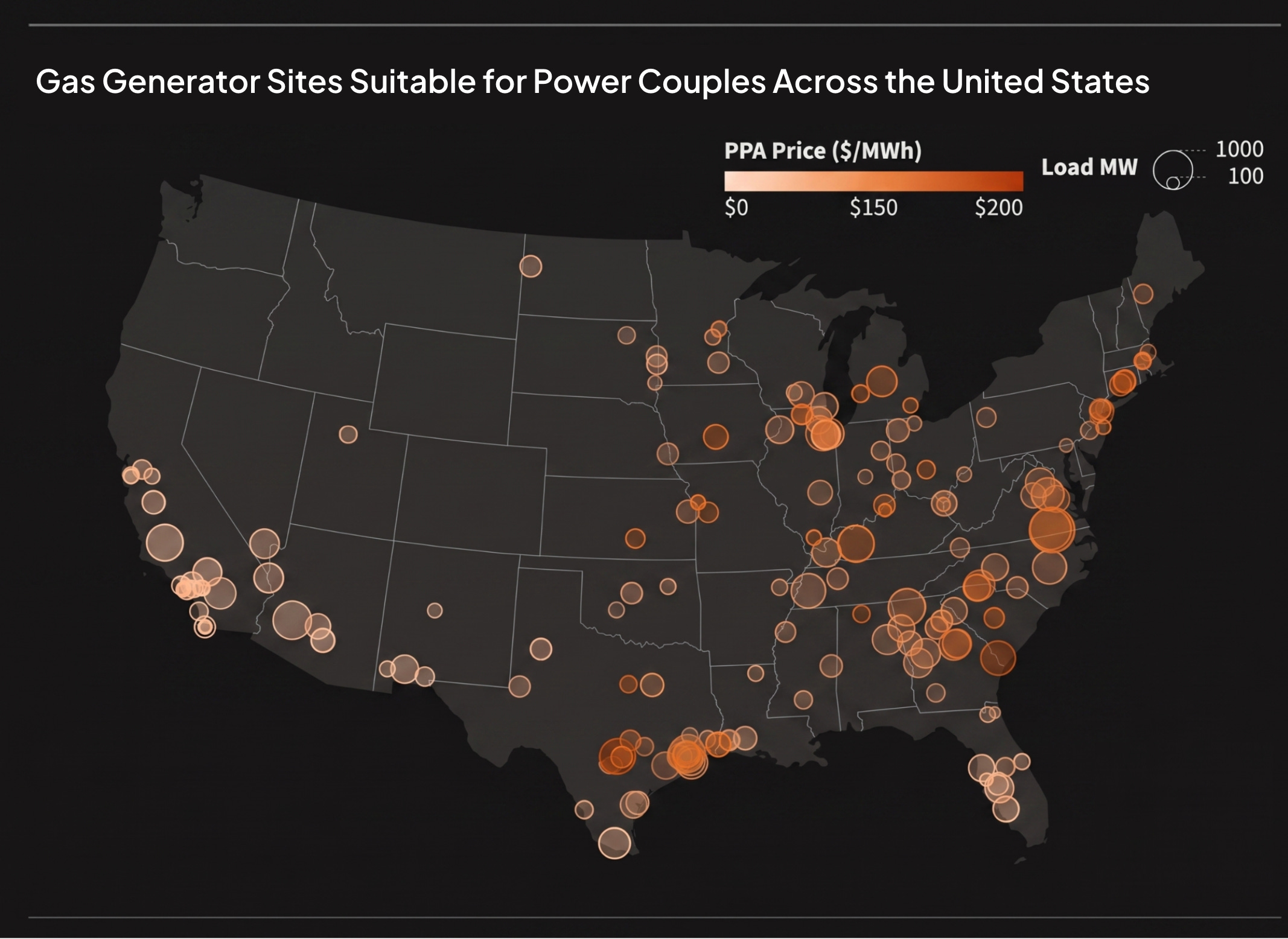
Federal policies are increasingly prioritizing expedited/fast-tracked grid access. On June 18, 2026, the Federal Energy Regulatory Commission (FERC) mandated that all six regional grid operators implement fast-track tariffs within 60 days for projects exceeding 20 MW. Under this policy, developers are responsible for all network grid upgrade costs required by their projects. This effectively enables large users to directly fund upgrades and obtain more predictable, accelerated timelines rather than waiting in standard interconnection queues. Certain regions, such as the Southwest Power Pool with its HILL framework, already guarantee 90-day reviews for projects over 50 MW that incorporate on-site generation. Additionally, FERC’s December 2025 co-location order for PJM, which will take place in July 2026, established clear guidelines for grid-adjacent transactions.
Bridge power serves as a temporary solution. Bloom solid oxide fuel cells can be set up in 55 to 90 days, though they cost an extra $175M-$280M per GW-year compared to grid combined-cycle power. Solar-plus-storage is perhaps the fastest option for a bring-your-own-power playbook, since it skips both the turbine order queue and stationary permitting. Crusoe, for instance, paired a 12 MW solar-and-second-life-EV-battery microgrid with its Spark modules in Nevada, then scaled the system sevenfold within nine months. Mobile turbines can eventually help cover larger gaps in power supply. For instance, xAI started its Memphis site with an 8 MW utility feed, supported by 35 mobile gas turbines and Tesla Megapacks.
Velocity Lever 3: Do Not Plumb On Site
AI halls designed for Blackwell-class density employ liquid cooling systems rather than air-based methods. Most on-site labor occurs here; technicians weld chilled-water loops, manually braze manifolds, and conduct pressure testing on all components on-site. Each of these procedures requires time.
How much water the liquid loop needs depends on where the heat goes after it leaves the building. Cooling towers use evaporation, so they always lose water and need a steady supply to replace it. Running a 200,000-GPU direct-to-chip cluster this way could use over 5 million gallons of water each day. Most city water systems cannot supply that much without years of upgrades. Memphis is attempting to solve this by building an $80 million, 13-acre wastewater recycling plant next to the site. The plant takes gray water from the city’s treatment system and cleans it for the cooling loops. While this might work for Memphis, it is hard to copy, since getting permits and building water infrastructure at this scale takes much longer than our 1-day goal.
The fastest approach is to reduce water-use from the beginning. Using dry coolers or air-cooled chillers for heat rejection, instead of evaporative towers, creates a closed-loop system where the same fluid is reused instead of lost to evaporation. This means much less makeup water is needed than with a traditional tower. The main drawback is that dry heat rejection is less efficient in hot and humid weather. Still, for projects where building quickly matters more than getting the lowest Power Usage Effectiveness (PUE), this tradeoff often makes sense. Removing evaporative towers also removes a whole swath of permitting and construction steps from the critical path.
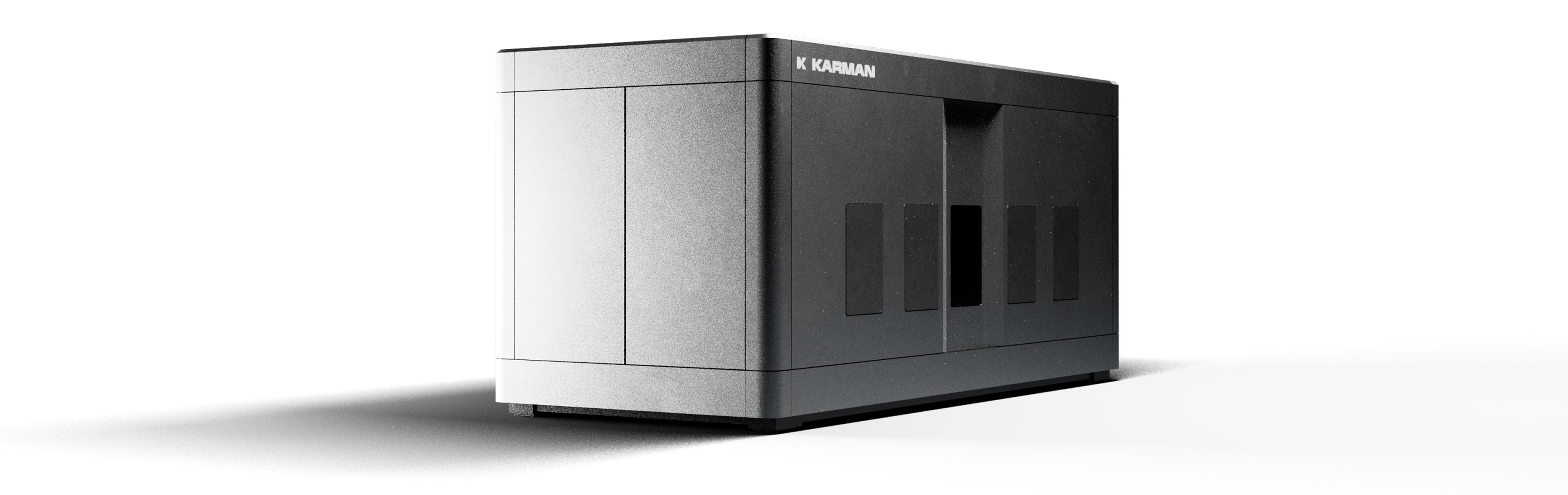
Karman Industries supports the dry-cooling strategy by integrating 10MW of zero-water thermal management into compact, containerized heat processing units (HPUs). These modular systems enable operators to minimize municipal water infrastructure and facilitate gigawatt-scale cooling deployment with accelerated timelines.
The remaining plumbing is addressed at the factory rather than on the job site. Racks should be delivered from the integrator already sealed, with cold plates mounted, loops pressure-tested, and equipped with blind-mate couplings that lock and seal as soon as the rack is installed. This approach was utilized for xAI's Supermicro and Dell systems, which shipped with pre-plumbed direct-to-chip loops and rear-door heat exchangers, ensuring each rack operates thermally neutral relative to its environment. The facility side should follow a similar model. Coolant distribution units can be delivered as skids, maintaining separation between the clean fluid within the racks and the building's water loop via a heat exchanger, and are connected on-site to modular dry coolers or chillers. The on-site crew is only required to make two pipe connections and provide a power feed per skid. If additional capacity is needed, another skid can be installed.
Velocity Lever 4: Use Pre-Fabricated E-Houses
Electrical fit-out needs more skilled field labor than any other part of a typical construction project. This is because switchgear usually arrives as separate pieces and must be connected by hand thousands of times, with each connection posing a risk for commissioning problems. An alternative is the e-house, which is a weatherproof, factory-tested enclosure that brings together everything from medium-voltage switchgear to step-down transformers, low-voltage boards, UPS or battery storage, and downstream power distribution units. All of these are pre-wired, and their busbar and protection settings are checked before shipping.
When you buy at that level, on-site installation is much simpler. It just takes a crane pick and some terminations, instead of a months-long fit-out. The shipping costs also usually work out well for the developer. Federal law allows loads up to 102 inches wide and 80,000 pounds gross to move without a permit, which is enough for a large power block to cross state lines without extra review. If you go over those limits, you need an oversize permit, which costs $15 to $100 per state, and line-haul costs are $12 to $14 per loaded mile. So, moving something 500 miles costs a few thousand dollars, which is minor compared to a facility that costs over $10 million per megawatt. The real limit on module size is when a load becomes a superload, usually at about 16 feet. At that point, you need a bridge-engineering review that takes 7 to 21 days per state, and this can add up to months along the route. The thresholds for superloads vary a lot: in Virginia, it starts at 18 feet or 250,000 pounds, but in Ohio, it’s just 14 feet and 120,000 pounds.
The additional cost you might expect with factory-built containers largely disappears when you compare it to similar setups. For example, with the same capacity, density, and redundancy, prefab costs $5.39M and stick-built costs $5.51M.
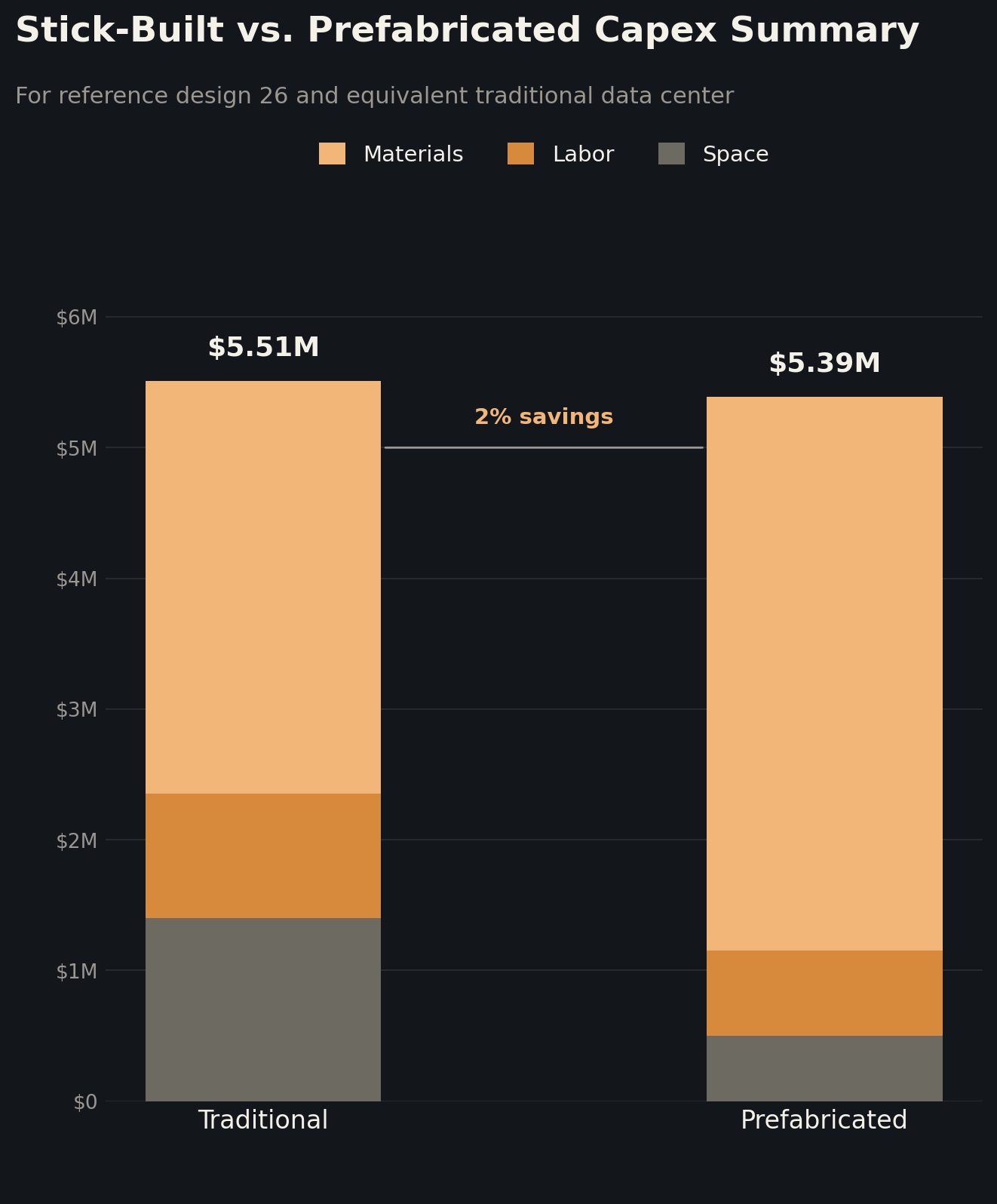
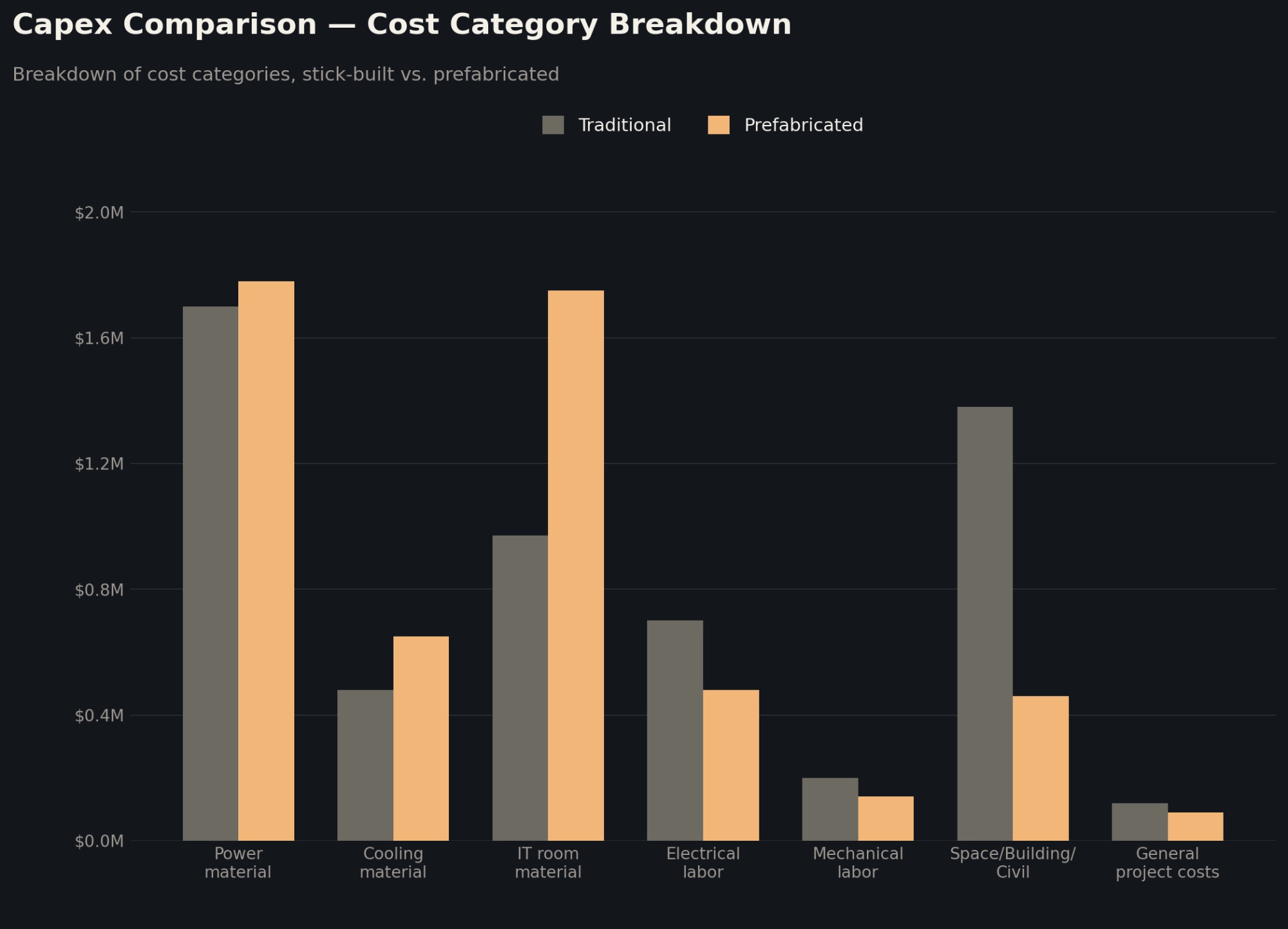
While the prices are almost the same, costs are divided differently. Materials for pre-fab cost a bit more because the enclosure and factory integration are included. Labor costs are much lower since the work is done once in a controlled factory, instead of being repeated by a field crew working around other site activities. Space costs are also much lower, which makes the biggest difference when you look at land, building size, and site preparation together. In the end, what buyers really get with a factory module is less risk since it is a fixed-scope, factory-priced product instead of unpredictable field labor. Most schedule delays usually start with field labor.
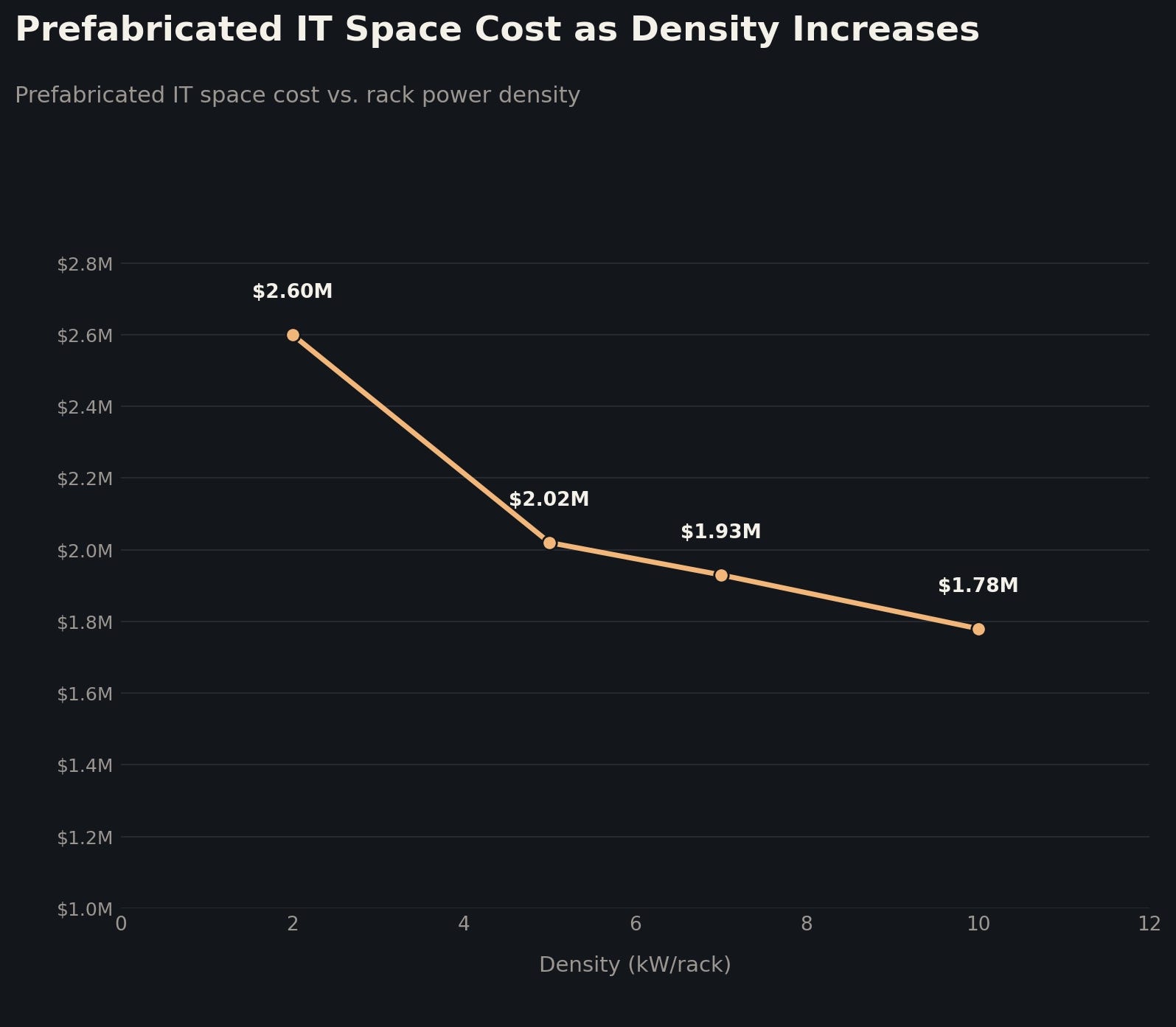
Density is the key factor in whether the container setup makes financial sense, since the shell cost stays the same no matter what you put inside. If a module isn’t filled, you’re basically paying for unused steel. For example, at 2 kW per rack, the shell overhead brings the cost of a reference block to about $2.6 million. If you increase that to 10 kW per rack, the cost drops to around $1.78 million (a 31% reduction) because the higher load spreads the cost over the same container. AI-level densities go even further, leading to a surprising result in prefab economics: with the same cooling setup, higher chip density actually makes the infrastructure cheaper per megawatt. This is because each extra megawatt is distributed across fewer containers, fewer crane lifts, and less land.
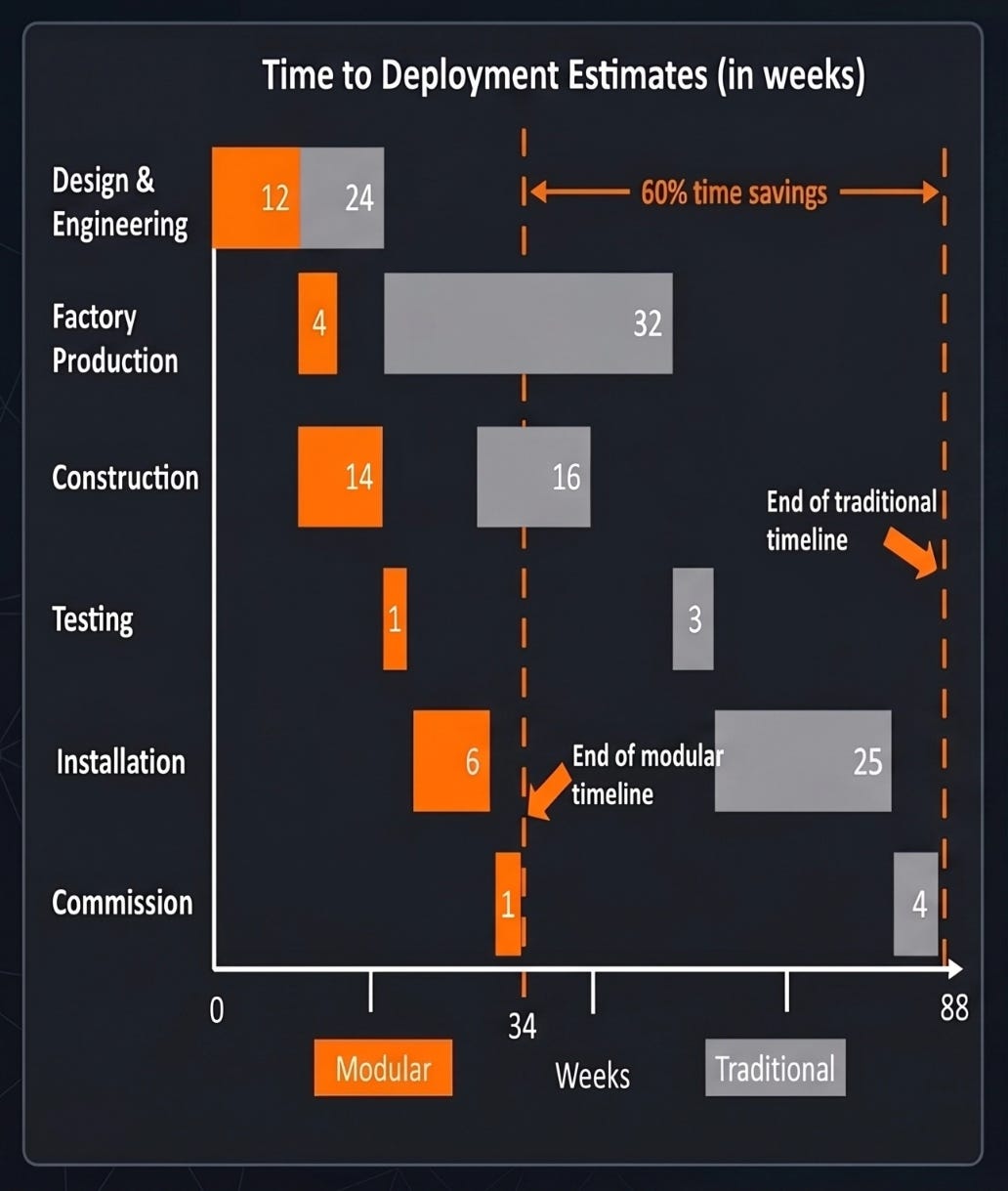
When you add everything together, pre-fab cuts the timeline for building a runway from 88 weeks to just 34 weeks (parallelized). This is possible because the modules are assembled in the factory while the pad is curing, instead of waiting for the pad to finish first. That means the schedule is shortened by about 60%, even before considering any extra time gains from brownfield or bridge-power improvements. Flex, a major integrator in this field, reports that on similar projects, on-site testing and cabling can be reduced by up to 70%.
Velocity Lever 5: Network for Velocity
Frontier training clusters usually use InfiniBand because it offers lossless, low-latency connections. However, InfiniBand can make fast physical setup difficult in ways that only become clear during construction. Optical paths require careful alignment, which is hard to maintain in the field. Transceivers can wear out from vibration and rough handling. These issues tend to worsen when builds are rushed, racks are moved quickly, and the team lacks time to adjust every connection.
Colossus decided to stop using it completely. The cluster now uses Nvidia’s Spectrum-X Ethernet with BlueField-3 SuperNICs, which provide 400 Gbps per GPU over RoCEv2. Adaptive routing and congestion control are managed by the hardware, keeping about 95% throughput efficiency even during heavy all-to-all training. While there is a small performance trade-off compared to InfiniBand, the main benefit is operational in that Ethernet is much more resilient, and racks can be swapped out without affecting the rest of the network. This is almost essential for installing racks as quickly as a one-day facility needs. Zero-touch provisioning finishes the process, so once a rack is in place, the fluid couplings connect, the switch identifies itself, and the network configures itself automatically, with no need for manual setup.
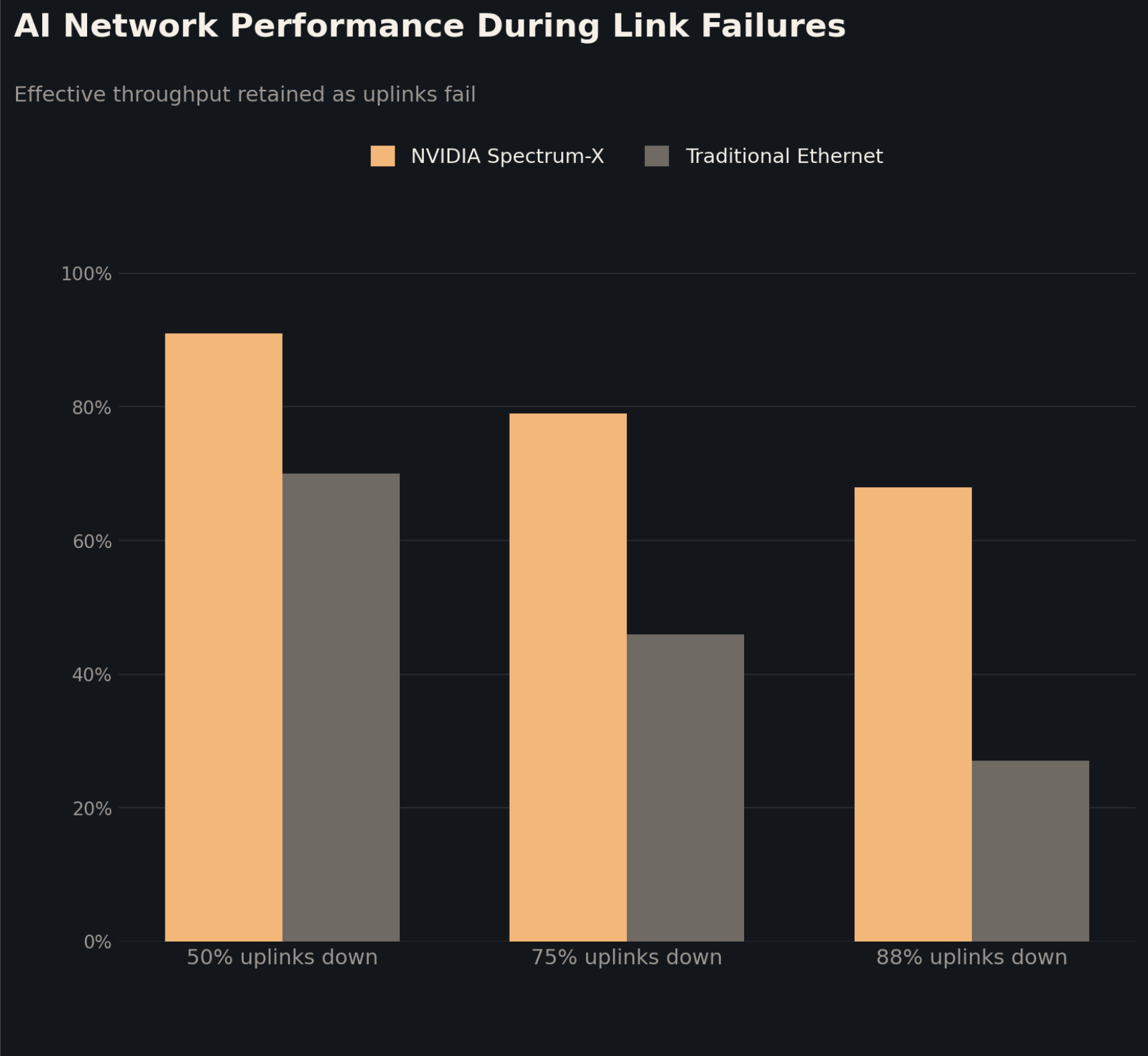
This approach removes the need for several weeks of initial network tuning and avoids the risk of outages every time a rack is swapped out in the future.
Velocity Lever 6: Commission Before Arrival, and in Parallel After
Commissioning is the one step you can’t necessarily shortcut in the factory. It’s the first time the utility feed, switchgear, UPS, and cooling plant all have to work together as a single system, instead of just passing their own tests. This is likely what caused Abilene’s winter outages: reliable power and cooling equipment coming together with a live grid for the first time, with no way to predict which connection might fail. You can’t avoid this moment by building more in advance (though perhaps in-factory testing could speed up this process). We recommend three specific approaches to tackling the commissioning process.
First, we should think about replacing traditional rented, static load banks. When commissioning a power/cooling plant, the traditional approach is to bring in static resistive load banks, run flat synthetic loads for a few days, and then return the equipment. This process is costly and overlooks important risks. GPU clusters draw power in sharp, synchronized bursts during training steps, creating a spiky load profile that static banks cannot simulate. On the other hand, skipping primary load testing puts expensive GPUs at risk if a transformer loses a phase or a coolant distribution unit (CDU) fails. A better approach is to use dynamic, programmable load banks for the initial energization, then switch right away to GPU burn-in software as racks power up for dual-purpose acceptance. Running burn-in software directly on the GPUs creates a real-world, dynamic compute load that tests breakers and busway thermal limits while also serving as the final hardware acceptance test.
The second approach removes control-logic validation from the critical path. During commissioning, delays usually come from verifying that the building management system reads sensors accurately, triggers interlocks at correct thresholds, and sequences failovers as intended. This logic can be developed and tested on a simulated model of the electrical and mechanical plant using the same control code intended for production well before the actual switchgear and CDUs arrive. Once the equipment is on site, the team only needs to confirm that the simulation matches reality. This process is faster and less likely to cause issues than developing and testing control logic directly on new equipment that was just hauled in.
The third recommendation is to avoid commissioning the entire building as a single unit. Instead, the site should be divided into separate pods that can be activated independently. Each pod must have its own upstream breaker and cooling loop, and should be sized to allow complete testing without reliance on downstream systems. Pods should be commissioned sequentially rather than simultaneously, enabling each pod to begin handling real workloads immediately after passing testing, rather than waiting for the slowest pod to be ready. For large sites, this approach ensures that the schedule of the final pod does not determine when the majority of computing power becomes operational, which contrasts with the outcome of a single commissioning campaign.
Memphis 2.0
The xAI Memphis approach serves as an exemplary model, but we think two modifications could make it more scalable. xAI incurred two costs that a new clean-sheet operator could potentially avoid.
xAI began construction in Memphis before securing a long-term power agreement. That meant when construction started, they didn’t yet know exactly how much grid/permanent power they’d have, or when it would arrive. So they had to over-provision on temporary power as insurance, renting more mobile turbines for longer than they’d have needed if the real power deal had already been locked in and its timeline was known. If the co-location or interconnection agreement had been signed first, they would have known exactly how long and how big the gap was between finishing construction and getting permanent power. Then, they could have rented only the temporary power needed to cover that specific period.
The second issue is dilution. The Memphis sprint was funded through several equity rounds, each based on AI-lab valuations, which made the capital for transformers and concrete expensive. Manufactured data centers take a different approach. A factory-tested module with proven performance is a reliable and transferable asset, unlike a foundation that is only partly built. In the new model, limited equity goes toward land options and deposits for long-lead equipment. These hard assets are then used to secure project financing and asset-backed loans to pay for silicon and power. Cheaper capital at the start brings benefits to future sites, while dilution keeps reducing ownership in the same way. For rare cases like xAI or Google, using high-valuation equity could actually be the lowest cost of capital. Google, for example, chose to raise roughly $85 billion in equity in June 2026, including a $10 billion Berkshire Hathaway placement, rather than lean further on debt to fund its AI infrastructure buildout. But since most companies cannot access this ultra-cheap equity, asset-backed financing is the more scalable option for the wider industry.
The Data Center as a Product
The defining bottleneck of our current era is time-to-power. Overcoming this requires a shift in execution towards modular, pre-fabricated, all-in-one designs. This means taking industrial shortcuts at every level, including by (1) inheriting sites rather than breaking new ground, (2) co-location and bridging grid delays with behind-the-meter power, (3) factory-sealing fluid lines, (4) dropping in pre-fabricated e-houses, (5) favoring fast network deployment, and (6) parallelizing commissioning.
The true theoretical floor, the “One-Day Limit,” is achieved when the deployment unit scales up from an individual server rack to a fully integrated 10MW ISO container module. If a container arrives at a site with compute, direct-to-chip liquid cooling manifolds, optical networking, and power conditioning pre-installed and pressure-tested from the factory, the on-site deployment becomes purely binary: drop, plug, and power on.